Affiliate disclosure: As an Amazon Associate I earn from qualifying purchases. This article may contain affiliate links, and Bay & Bench may earn a commission at no extra cost to you. Read our full Affiliate Disclosure.
Six inches sounds minor until it runs beside a parked car for eight feet. Shelf depth affects the aisle every day, while extra capacity matters only when the objects use it.
Quick answer
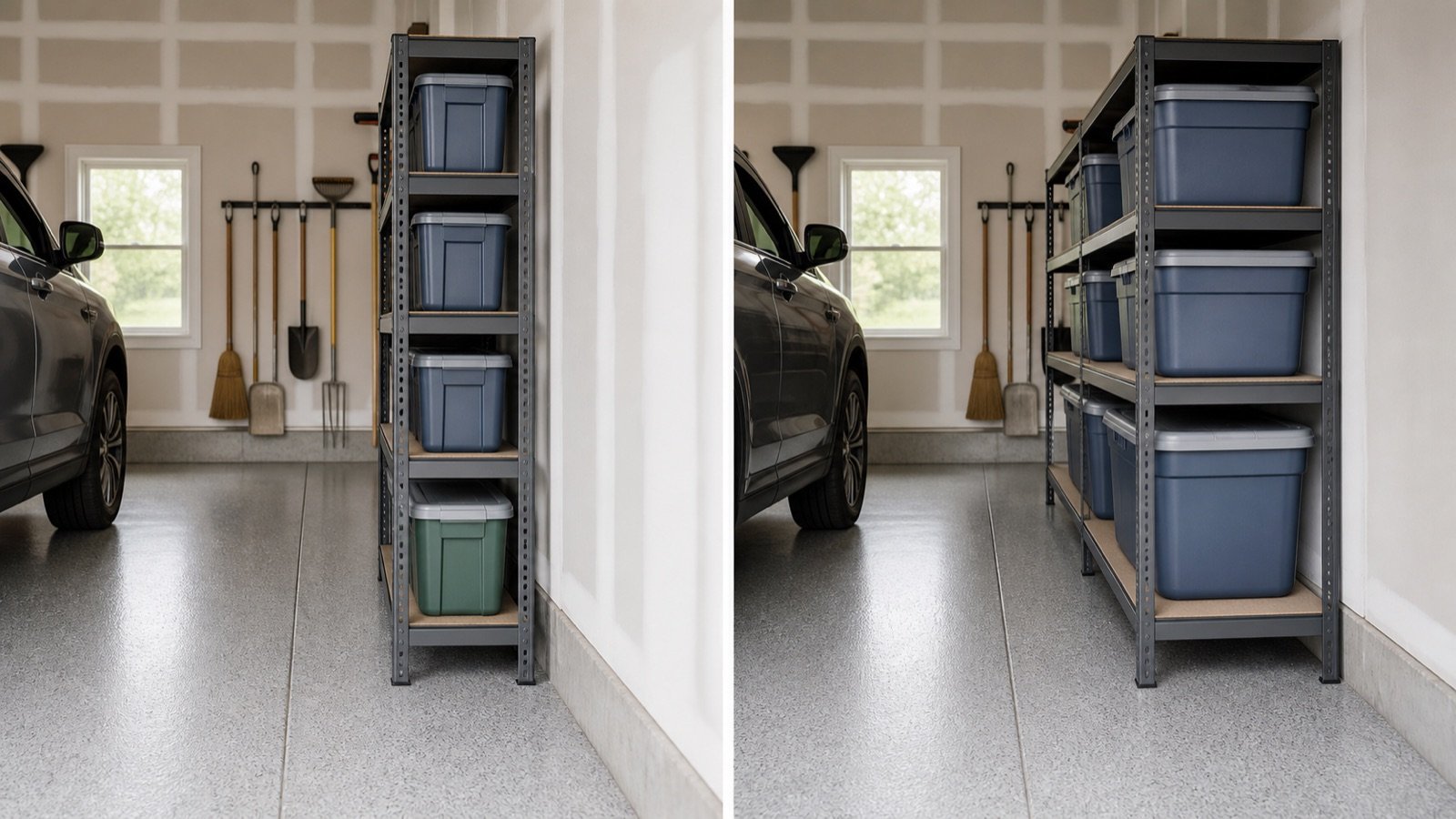
Choose 18 inch shelves for tighter parking, medium bins, and better visibility. Choose 24 inch shelves for genuinely deep totes and bulky gear, provided the aisle and reach still work. Measure usable deck depth, not just the product name.
Tape both footprints
Mark 18 and 24 inches from the wall, including any base gap or upright projection. Park the vehicle and walk the route carrying the largest tote. Open the nearest car door.
The better depth is the one that passes this test without forcing awkward movement.
What 18 inches does well
Shallow shelves make labels easier to see and reduce double rows. They suit many medium bins, tool cases, gardening supplies, and household stock. Less depth also discourages forgotten objects at the back.
When 24 inches earns its space
Large totes, coolers, shop equipment, and wide automotive gear may need the deeper deck. Confirm that the object sits fully supported and fits between the uprights.
Do not buy deep shelves for future capacity without naming the objects that will occupy it.
Compare the tradeoffs
| Factor | 18 inch | 24 inch |
|---|---|---|
| Aisle use | Preserves 6 inches | Consumes 6 more inches |
| Visibility | Easier single rows | More chance of hidden items |
| Large tote fit | May leave overhang | Often better, verify exact tote |
| Reach | Easy to reach rear | Harder on high shelves |
Use mixed depths carefully
A deep rack at the back wall and shallow shelving beside the vehicle can make sense. Keep transitions visible so shoulders and carried bins do not catch a projecting corner.
Measure the usable shelf
Frames, lips, braces, and uprights can reduce usable space. Check the clear depth and opening in the manual. Then enter the wall and unit dimensions in the shelving planner.
The broader buying guide covers materials and ratings.
High shelves make depth harder to use
Deep storage above eye level hides labels and pushes the rear row beyond comfortable reach. A 24 inch deck that works at waist height can be irritating near the top of the rack. Plan depth and shelf height together.
If deep upper shelves are unavoidable, use one light pull-forward bin per position instead of loose objects in two rows.
Calculate capacity with real bins
Divide usable shelf width by the loaded bin width, then check depth and opening height. Repeat for every shelf. Marketing photos often use containers chosen to make the rack look full; your bin family may leave large gaps.
A cardboard template of the shelf opening is a quick way to test handles and lids in the store or garage.
Useful products to compare
Use these searches to compare current dimensions, ratings, manuals, and availability. Check the exact model before buying.
Before you buy or install
Download the current manual for the exact model. Confirm assembled and packaged dimensions, individual and total load ratings, required clearances, mounting structure, included hardware, warranty, and inspection instructions. Product listings and specifications can change.
Mark the footprint or platform edges in the garage. Operate the vehicle doors and garage door, carry the intended bin through the access route, and check service panels and utilities. Do not improvise around electrical, gas, fire, or structural conditions.
Frequently asked questions
Will an 18 inch tote fit an 18 inch shelf?
Not necessarily. Measure the tote at its widest point and compare it with the usable deck and upright opening.
Can bins overhang the shelf?
Follow the shelf and bin instructions. Overhang can reduce stability and make retrieval awkward.
Which depth is better for a one car garage?
Often 18 inches, but only a parked vehicle and tape mockup can confirm the room.
Last reviewed: July 2026. Verify current product specifications and installation requirements before purchase.