Affiliate disclosure: As an Amazon Associate I earn from qualifying purchases. This article may contain affiliate links, and Bay & Bench may earn a commission at no extra cost to you. Read our full Affiliate Disclosure.
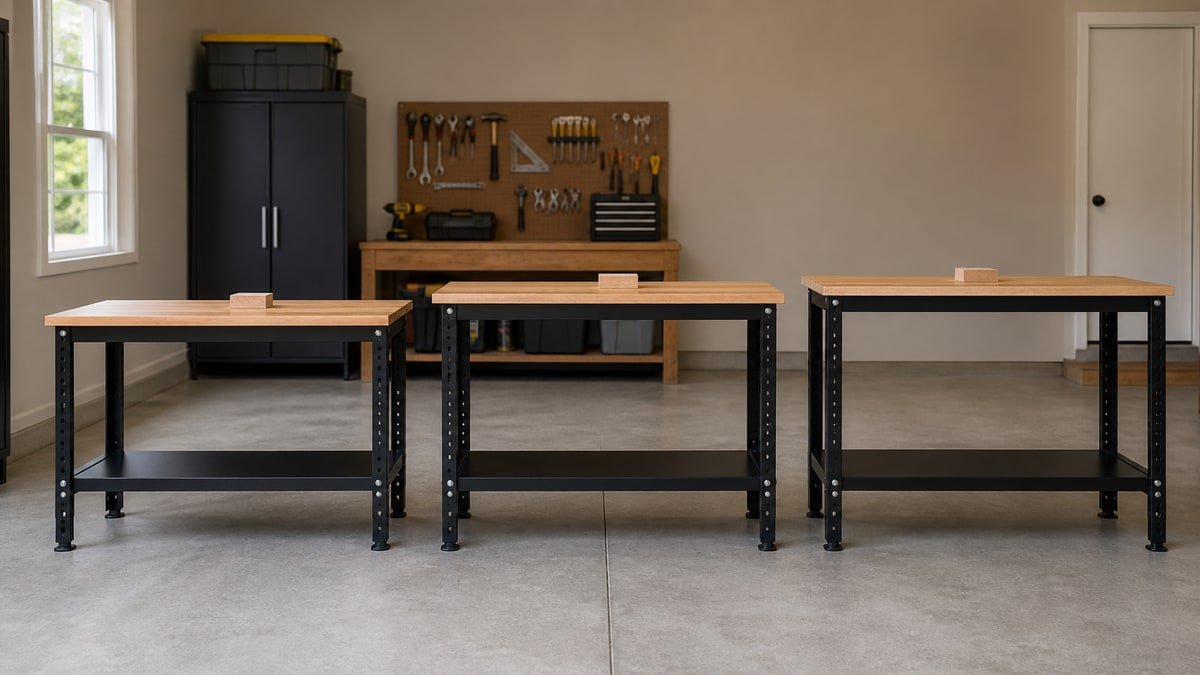
The 34 vs 36 vs 38 inch workbench height choice looks like a two inch step between three ordinary numbers. At the bench, each step is noticeable. A 34 inch surface can give a taller user room to lean into planing or assembly. A 38 inch top can bring detail closer to the eyes and reduce bending for a shorter user. The familiar 36 inch option often lands between those jobs, although comfort still depends on the user and task. Compare each height with your measured elbow level, then add the thickness of the workpiece, vise, mat, or machine. A top that is 36 inches from the floor may create a 40 inch hand position once the project is clamped. The tables and tests below turn the three labels into working differences you can feel before you buy.
Quick answer
Choose among 34, 36, and 38 inches by measuring your standing elbow height and subtracting each bench height from it. A surface several inches below the elbow often suits general or forceful work, while a surface near the elbow may suit close visual tasks. Count anything placed on the top. If the result is still uncertain, tape or build three stable mockups and spend ten minutes doing the same task at each one.
34 vs 36 vs 38 inch workbench height in measured terms
Start with your elbow height rather than your total height. Two people who are the same height can have different arm and torso proportions. Stand naturally, bend the elbow, and measure from the floor. Then calculate the difference between that number and each candidate bench.
| Measured standing elbow height | 34 inch bench | 36 inch bench | 38 inch bench |
|---|---|---|---|
| 36 inches | 2 inches below elbow | At elbow | 2 inches above elbow |
| 38 inches | 4 inches below elbow | 2 inches below elbow | At elbow |
| 40 inches | 6 inches below elbow | 4 inches below elbow | 2 inches below elbow |
| 42 inches | 8 inches below elbow | 6 inches below elbow | 4 inches below elbow |
This table is arithmetic, not a fit prescription. Add the workpiece height next. If a project lifts your hands by 3 inches, a 36 inch bench acts like a 39 inch working point for that operation. The workbench height calculator helps organize those inputs.
What the task changes
Published ergonomic guidance explains why one surface cannot be best for every job. The CCOHS standing workstation guide places precision work above elbow height, light work a little below, and heavy downward work farther below. The HSE posture guide follows the same general order and recommends adjustment where possible.
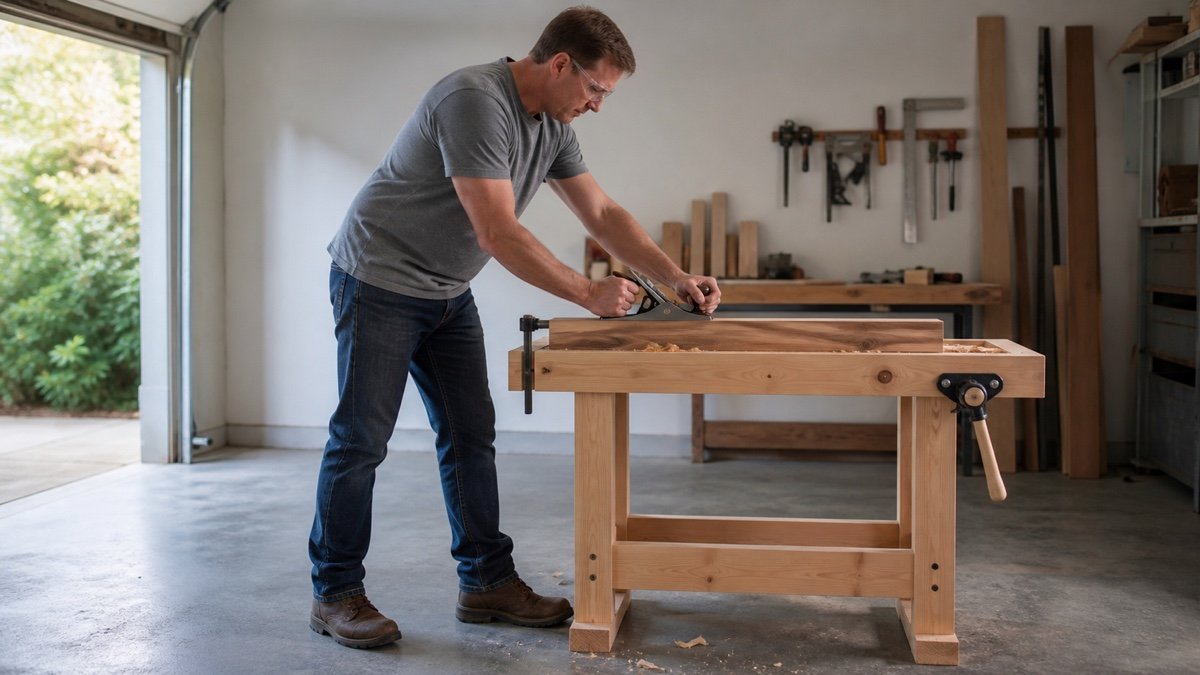
For garage work, think in motions. Marking, wiring, model assembly, and close inspection reward a clear view. Sanding, light mechanical assembly, and general repair need a neutral wrist and relaxed shoulders. Hand planing, chiseling, or pressing on a stubborn part may benefit from a lower working point, provided the user can stay controlled and the work is secure.
Do not use the lowest number as permission to bend through the back. If a 34 inch top makes you fold forward during every light task, it is too low for that use even if it feels powerful for a few planing strokes.
When a 34 inch workbench makes sense
A 34 inch surface can suit forceful work, taller users, and thick projects. It also leaves room for a large vise or a benchtop machine without pushing the operating point near shoulder level. Woodworkers who use hand planes often prefer space to place controlled body weight over the tool.
The drawback shows up during detail work. A user with a 40 inch elbow height has a 6 inch drop to the bare top, and a thin project may require noticeable bending. Raise small work with a secure fixture or use a task light that does not force your head closer. Deep shelves or drawers under a low bench can also limit knee room for a stool.
Before choosing 34 inches, try writing measurements, fitting a small fastener, and sanding for ten minutes at that level. If your back stays flexed during the easy tasks, plan a raised fixture. If the bench will hold a vise, include the jaw height in the test rather than judging the empty top.
Why 36 inches is common but not universal
A 36 inch workbench often fits general garage tasks because it sits near familiar counter height and leaves a moderate drop below the elbows for many adults. It can work for assembly, repairs, packing, and occasional woodworking without making any one task extreme.
That convenience has limits. A shorter user doing close work may find a thick project too high, while a tall user handling small parts may still bend. If the installed vise jaw and typical part sit 4 inches above a 36 inch top, the hands work near 40 inches. Mounted tools deserve their own operating height calculation.
Use the garage workbench buying guide to compare the top, apron, storage, and frame along with height. Two benches both listed at 36 inches can feel different because one has a rounded thin edge and open knee space while the other has a deep drawer bank that keeps you farther away.
When a 38 inch workbench feels better
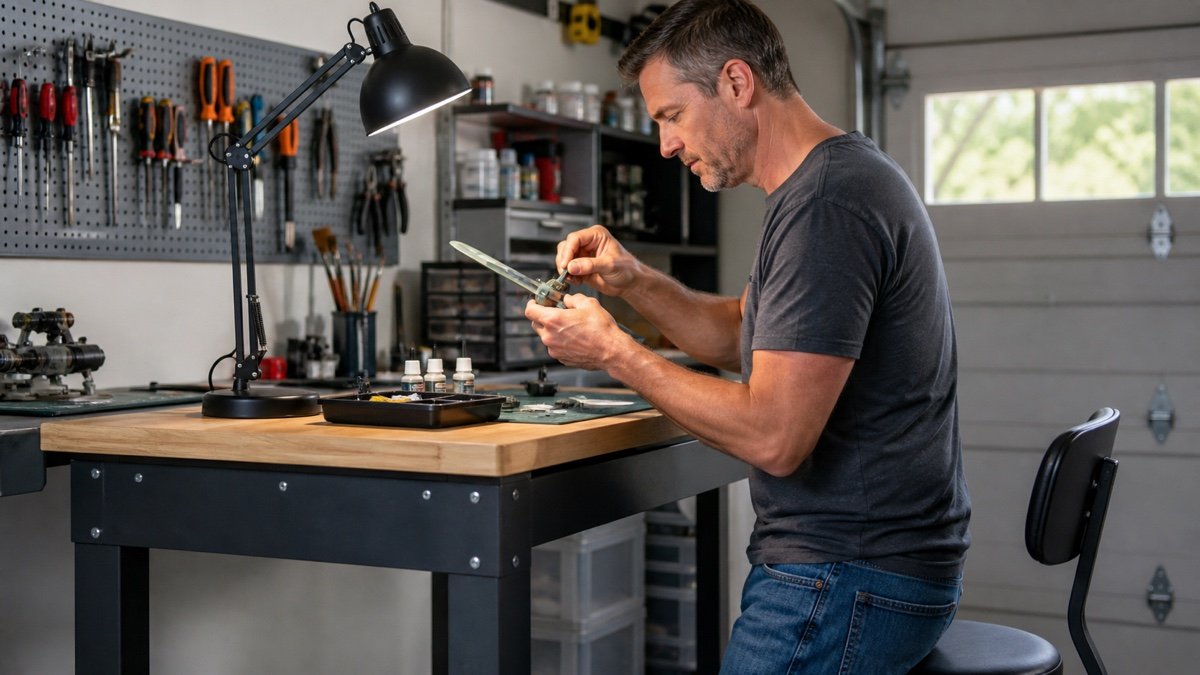
A 38 inch surface brings a small project closer to the eyes. It can suit shorter users, fine assembly, electronics, sharpening, model work, or tasks where the hands should stay near elbow level. The higher top may also create more useful storage height below, although drawers and braces still have to leave room for knees if you sit.
The tradeoff is leverage. A taller user may like 38 inches for detail but feel crowded when pressing down on a plane or holding a heavy assembly. A bench top tool can raise controls and the work even farther. Check the machine manual for its required support and operating position rather than using the bench as a generic stand.
A high bench needs the same stability checks as a lower one, especially if it is narrow or mounted on casters. Raising the center of gravity can make movement more noticeable. Load the mockup with a realistic project and press gently from different working positions before deciding.
Tool thickness can reverse the result
The bare bench number is only part of the stack. Add the top of a vise jaw, a sacrificial board, a cutting mat, a router table insert, or the base of a project fixture. A 34 inch bench plus a measured 6 inch jaw-and-part rise can put the work higher than a 38 inch bench holding a thin board flat on its top.
Make a simple task stack for each recurring job:
| Example task | Bare bench | Added height | Resulting hand level |
|---|---|---|---|
| Flat sanding | 36 inches | 1 inch board | 37 inches |
| Part held in vise | 34 inches | 5 inch measured jaw-and-part rise | 39 inches |
| Fine assembly on riser | 36 inches | 3 inch platform | 39 inches |
| Benchtop tool | 34 inches | 8 inch operating table | 42 inches |
These are example calculations, not product dimensions. Measure your equipment. The result often shows that one lower base plus stable fixtures covers more tasks than a permanently tall top.
Seated use changes more than the height
If you plan to sit, bring the actual stool into the mockup. Your feet need support, your thighs need clearance, and you need to get close enough that the top edge does not force a long reach. A thick apron or center drawer can make a good standing height poor for seated work.
A 38 inch bench may pair easily with a tall shop stool for some users, but it can leave the feet dangling without a ring or separate footrest. A 34 inch bench may accept a lower stool, yet the vise or project can still be high. Adjust the seat and working point together.
The OSHA desk guidance is written for office stations, but its basic concern about leg clearance and getting close to the work still applies. For garage tasks, also consider sharp edges, chips, hot work, and the need to move away safely. Do not use an office chair where the task, debris, or floor makes it unsuitable.
Build a three height mockup in the actual bay
Mark the proposed bench footprint with tape after parking the vehicle. Use a stable adjustable table or secure supports to create 34, 36, and 38 inch trials. Place the normal top thickness, vise, mat, or tool on each trial. Then repeat the same short task at every height.
Score five things from one to five: shoulder relaxation, wrist position, back angle, visibility, and ability to apply the needed force. Use the same task and project so the comparison stays fair. A difference that sounds small on paper often appears immediately when you repeat a motion.
Run the footprint through the garage storage fit calculator, then open the car door, bench drawers, and nearby cabinet doors. Height can influence where your upper body leans into the aisle. The garage measuring guide helps catch wall controls and door hardware before the bench becomes difficult to move.
Choose a range, then check the exact model
If one height wins every test, the decision is easy. More often, two heights work for different jobs. Pick the one that supports the dominant task and solve the secondary task with a secure fixture, stool, or adjustable frame.
Before ordering, confirm whether the listed dimension reaches the bare frame, the installed top, or an adjustable range. Count caster height and leveling feet. Check top thickness, leg and drawer clearance, vise compatibility, capacity wording, and how the bench must be anchored or stabilized. A product photo is not enough to settle those details.
Do not cut legs or add risers until you know what the change does to bracing, warranty, and load. If you are building the bench, leave a modest adjustment path. Removable feet or a replaceable lower rail are easier to revise than a cabinet base built tightly between the floor and top.
Useful products to compare
These links open current Amazon search results so you can compare dimensions, manuals, ratings, and availability for the exact models on your shortlist.
Before you buy or install
Check the current manual for the exact product you are considering. Confirm the assembled dimensions, load rules, mounting requirements, included hardware, clearances, warranty, and any limits that apply to your wall, floor, or garage layout.
Frequently asked questions
Is a 34 inch workbench too low?
It depends on your elbow height, task, and workpiece. It may suit forceful work or a tall fixture, but it can cause bending during detail work. Test it with the real task before deciding.
Is 36 inches the best all purpose workbench height?
It is a useful middle option for many garages, but it is not universal. The workpiece, vise, user, and dominant task can make 34 or 38 inches a better fit.
Who should consider a 38 inch workbench?
A shorter user or someone doing close visual work may prefer it. Check mounted tool height and forceful tasks, since a high working point can reduce leverage or raise the shoulders.
How can I use one bench for different task heights?
Choose the base height for the dominant or most forceful task, then use a stable removable platform for small precision work. An adjustable frame is another option when the task or user changes often.