Affiliate disclosure: As an Amazon Associate I earn from qualifying purchases. This article may contain affiliate links, and Bay & Bench may earn a commission at no extra cost to you. Read our full Affiliate Disclosure.
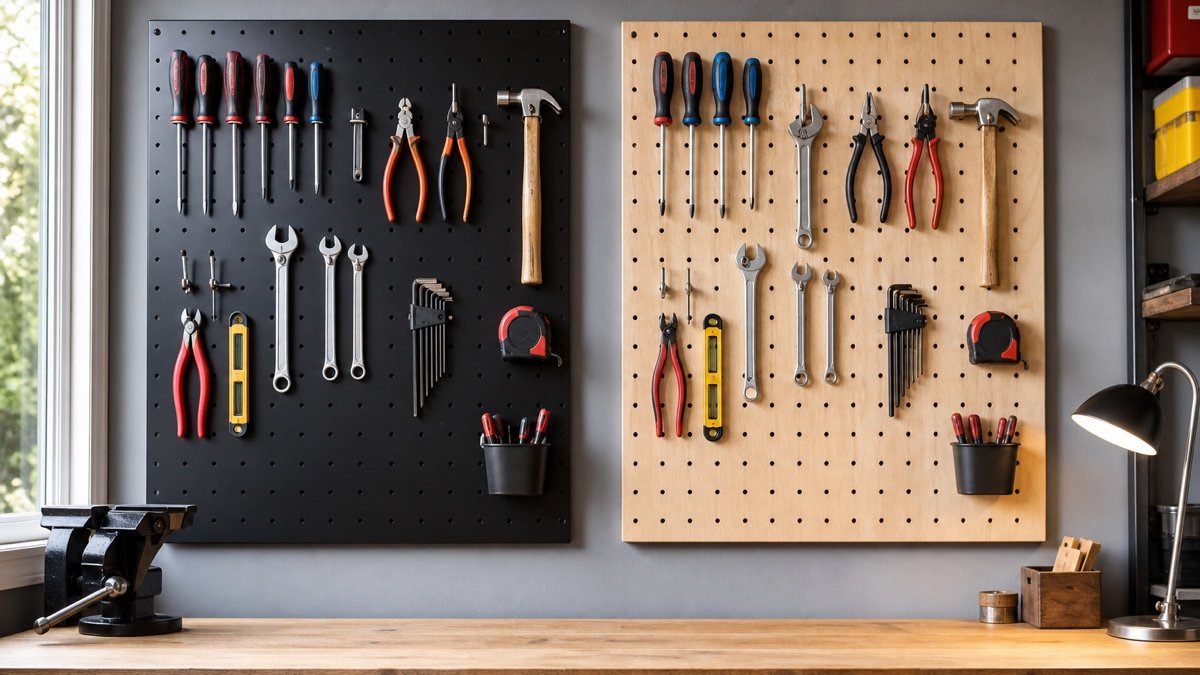
The metal vs wood pegboard choice becomes clearer once you picture a wet shovel beside a row of clean bench tools. Both materials can hold the same pliers, yet they feel quite different in daily use. Metal panels are tidy, rigid, and often arrive with formed edges that create space for hooks. Wood based panels are easy to cut and visually at home above a traditional bench. The better material depends less on style than on moisture, tool weight, mounting, and which hooks you already own.
Quick answer
Choose metal pegboard for a damp or hard working garage, a clean finished appearance, and panels with published load ratings. Choose wood or hardboard pegboard for a dry workshop, easy custom cutting, a lower initial cost, and a warmer look. Before buying either one, confirm hole diameter, spacing, panel thickness, standoff depth, accessory fit, and the manufacturer’s mounting requirements.
Wood pegboard is not one material
Shoppers often use wood pegboard to describe two different products. Traditional hardboard pegboard is an engineered fiber panel with a regular grid of holes. Plywood pegboard uses layered wood veneer and is often thicker, stiffer, and more decorative. Their behavior around moisture, fasteners, and hooks is not identical.
Hardboard is easy to find and cut with ordinary woodworking tools. It is a practical way to organize light hand tools in a dry shop. Unsealed edges and holes can absorb moisture, though, and a thin panel may bow if it lacks enough support. Plywood offers a more finished appearance and accepts custom joinery well, but it still needs an appropriate finish when humidity is a concern.
Do not assume thickness from a product photograph. Hook engagement depends on the real panel thickness and the space behind it. Check the product sheet, then test one hook before laying out the whole wall.
What metal pegboard changes
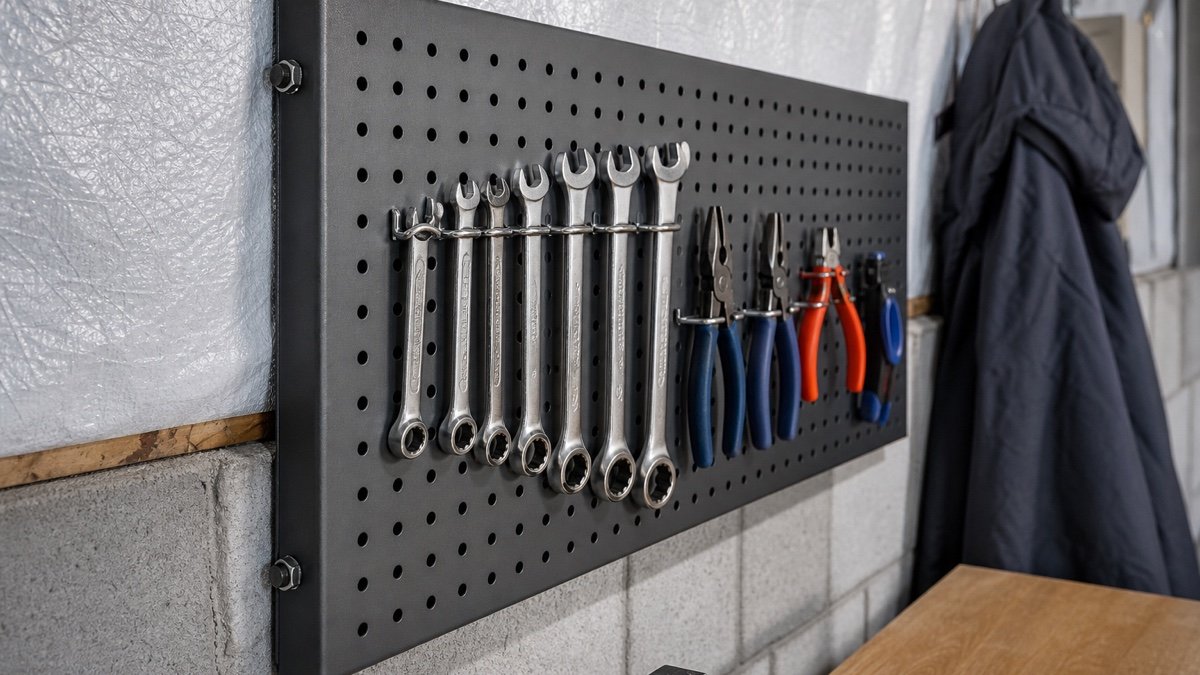
Metal pegboard is commonly made as a smaller powder coated steel panel rather than one large sheet. Formed edges can stiffen the panel and hold it away from the wall, so you may not need separate wood furring strips. Some panels also use slots alongside round holes for proprietary shelves and bins.
That construction feels crisp. Hooks do not enlarge fiber holes through repeated use, and a coated surface wipes clean after dusty or greasy work. In a garage where wet jackets, road salt, or garden tools come through the door, metal is often the less fussy option.
It is not maintenance free. A deep scratch can expose steel, and water trapped against an unprotected edge may start corrosion. Thin panels can dent. The safest assumption is that finish quality and panel geometry matter as much as the word metal.
Metal panels also produce more sound. Dropping a wrench onto a holder or bumping a loose hook can ring through the wall. Rubber tipped accessories and a solid mounting job reduce the rattle, but they will not make steel sound like plywood.
Side by side comparison
| Factor | Metal pegboard | Wood or hardboard pegboard |
|---|---|---|
| Moisture | Coated panels handle routine dampness well, but scratches need attention | Edges and holes may swell if the panel is not sealed |
| Rigidity | Formed panels are often stiff for their size | Depends heavily on material, thickness, and frame support |
| Cutting | Possible only with suitable tools and edge treatment | Easy to cut with common woodworking tools |
| Appearance | Clean industrial finish | Traditional shop look or warm plywood grain |
| Mounting gap | Some panels have built in flanges | Usually needs spacers or a frame |
| Noise | More likely to clang or rattle | Quieter during everyday handling |
| Accessory choice | May combine holes and brand specific slots | Broad basic hook selection when dimensions match |
These are tendencies, not promises. A well braced plywood panel may be more rigid than a flimsy steel panel. Compare actual specifications and installation diagrams.
Load ratings deserve a closer look
Do not compare pegboards using one large capacity number. First ask whether the rating applies to the whole panel, one attachment point, or an evenly distributed load. Then check the hook rating and mounting pattern. The wall connection remains part of the system.
Tool leverage matters. A compact wrench sits close to the panel. A cordless drill on a long shelf places its weight farther from the wall. The drill may weigh less than a row of wrenches but place more force on the panel and fasteners.
Keep dense tools near the lower part of the panel and near support points. Leave large battery tools on a shelf designed for them rather than improvising with two long hooks. If a manufacturer does not publish a clear rating for the proposed accessory, choose another arrangement.
Our wall layout planner helps with available area, but it cannot calculate structural capacity. Use the manual for that decision.
Hook compatibility can decide the purchase
Many pegboard accessories are sold by nominal hook size, often associated with common hole diameters. That does not guarantee a good fit. Hole spacing, board thickness, backing clearance, slot shapes, and retaining features can all differ.
Metal systems sometimes pair round holes with slots that accept special brackets. Those accessories may lock more positively than a plain hook, but they can tie future purchases to the same brand. Traditional hardboard often accepts a broad range of simple hooks, although loose hooks may lift out when you grab a tool.
Before ordering a large bundle, buy or borrow one hook in each format you plan to use. Load it with the intended tool and remove that tool several times. Watch whether the hook rocks, scratches the panel, or comes away in your hand. A five minute test tells you more than an accessory count printed on a box.
Wood is easier to customize
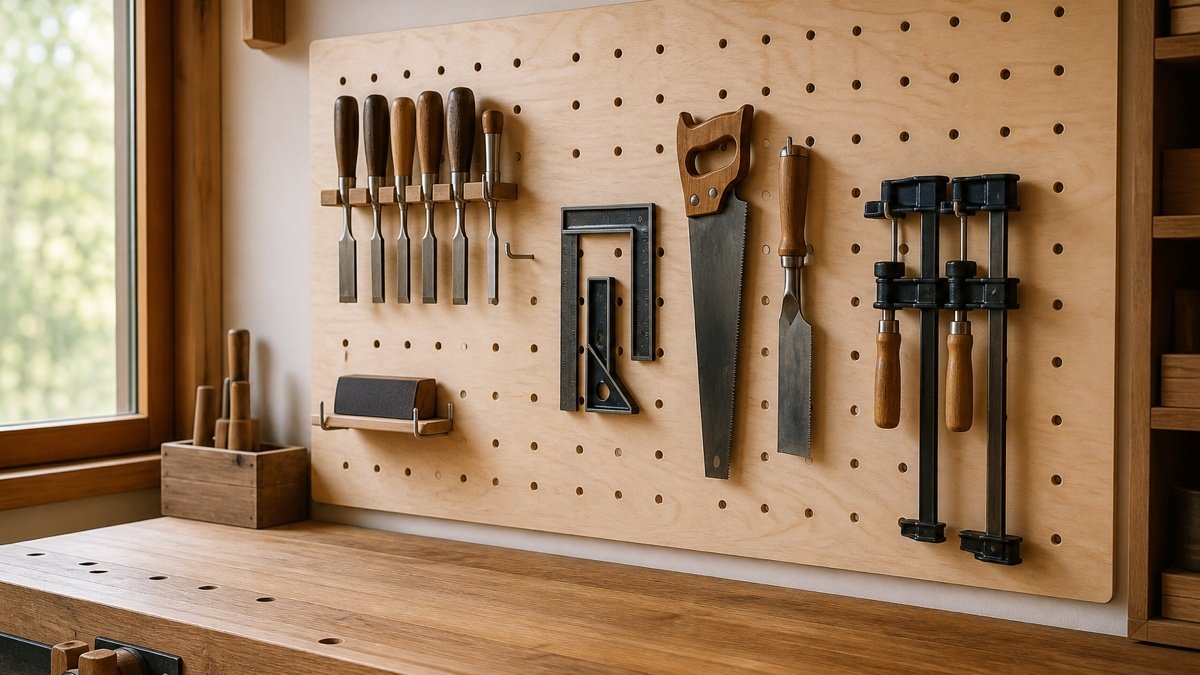
A wood panel is forgiving when the wall has an odd width. You can trim it around a cabinet, frame the edges, drill a custom opening, or finish it to match the workbench. Plywood pegboard can become part of the furniture rather than looking like an organizer added later.
Seal every cut edge and the inside of exposed holes when the product and chosen finish allow it. The bottom edge deserves attention because it is close to bench spills. Let the finish cure fully before hanging tools.
Metal panels offer less casual customization. Cutting may damage the coating, leave sharp edges, and affect how the panel mounts. Smaller modular panels are usually the cleaner answer. Arrange standard sections around outlets and cabinets instead of modifying them unless the manufacturer permits cutting.
There is one useful compromise: mount wood pegboard over the bench for chisels and layout tools, then place a metal panel near the garage entry for wet or dirty hand tools.
Mounting details that prevent frustration
A pegboard needs empty space behind the face so hook legs can pass through. For wood panels, that usually means a perimeter frame plus intermediate support sized for the panel. Support should not block the holes you expect to use. Metal panels with formed sides may include the needed gap, but only when installed in the approved orientation.
Locate studs and any hidden services. Mark the panel outline, check it with a level, and make sure drawers, cabinet doors, and task lights still work. Do not cover an outlet or electrical panel. If the wall is masonry, use the installation method specified for that panel and substrate.
Set the lower edge high enough to clear items on the bench but low enough that short tools remain reachable. Lay the tools on the bench in rough groups before placing hooks. Keep a clear patch for the tool you will buy next month.
For a full garage measurement routine, use our guide to measuring a garage for storage.
Cost is more than the panel
Basic hardboard usually has a low entry cost, but add the frame, finish, fasteners, hooks, bins, and time spent cutting. A metal kit may cost more at checkout while including standoffs or mounting flanges. It may still need proprietary brackets for the layout you want.
Build a short bill of materials for one complete work zone. Count the drill shelf, plier holders, small bins, hook retainers, and mounting hardware. Price replacement accessories too. A cheap panel paired with awkward hooks is not a bargain.
If the wall will hold only twelve everyday tools, either material can work. Spend the decision on fit and placement. If the wall will keep changing, accessory availability becomes more important. A common hook format or a dependable modular system is worth paying for.
Which one should you buy?
Metal pegboard is the straightforward choice for a garage exposed to damp gear, frequent cleaning, and hard use. Look for published ratings, a durable finish, a practical accessory range, and a mounting system that suits the wall.
Wood or hardboard is a good fit in a dry workshop where easy cutting, low cost, and a warm appearance matter. Use enough support and protect vulnerable surfaces. Plywood is the attractive version when the tool wall is part of a carefully built bench.
Neither material should carry every object in the garage. Move bikes, ladders, and long yard tools to an appropriate rail or slatwall zone. Our slatwall, pegboard, and track comparison shows how those formats divide the work.
Useful products to compare
These links open current Amazon search results so you can compare dimensions, manuals, ratings, and availability for the exact models on your shortlist.
Before you buy or install
Check the current manual for the exact product you are considering. Confirm the assembled dimensions, load rules, mounting requirements, included hardware, clearances, warranty, and any limits that apply to your wall, floor, or garage layout.
Frequently asked questions
Does metal pegboard use regular pegboard hooks?
Some panels do, while others rely on a particular hole, slot, or locking pattern. Match hole size, spacing, panel thickness, and the manufacturer’s compatibility list before buying accessories.
Should wood pegboard be painted or sealed?
In a garage, protecting exposed faces, edges, and cutouts can reduce moisture absorption. Use a finish suitable for the panel material and let it cure before loading the board.
Can metal pegboard rust?
Coated steel resists routine exposure, but scratches, bare cut edges, standing moisture, and salt can lead to corrosion. Inspect damage and follow the maker’s care instructions.
Which pegboard is better for heavy tools?
Choose by the exact panel, mounting, and accessory ratings rather than material alone. Keep dense tools close to supports and use a purpose built shelf or holder for power tools.