Affiliate disclosure: As an Amazon Associate I earn from qualifying purchases. This article may contain affiliate links, and Bay & Bench may earn a commission at no extra cost to you. Read our full Affiliate Disclosure.
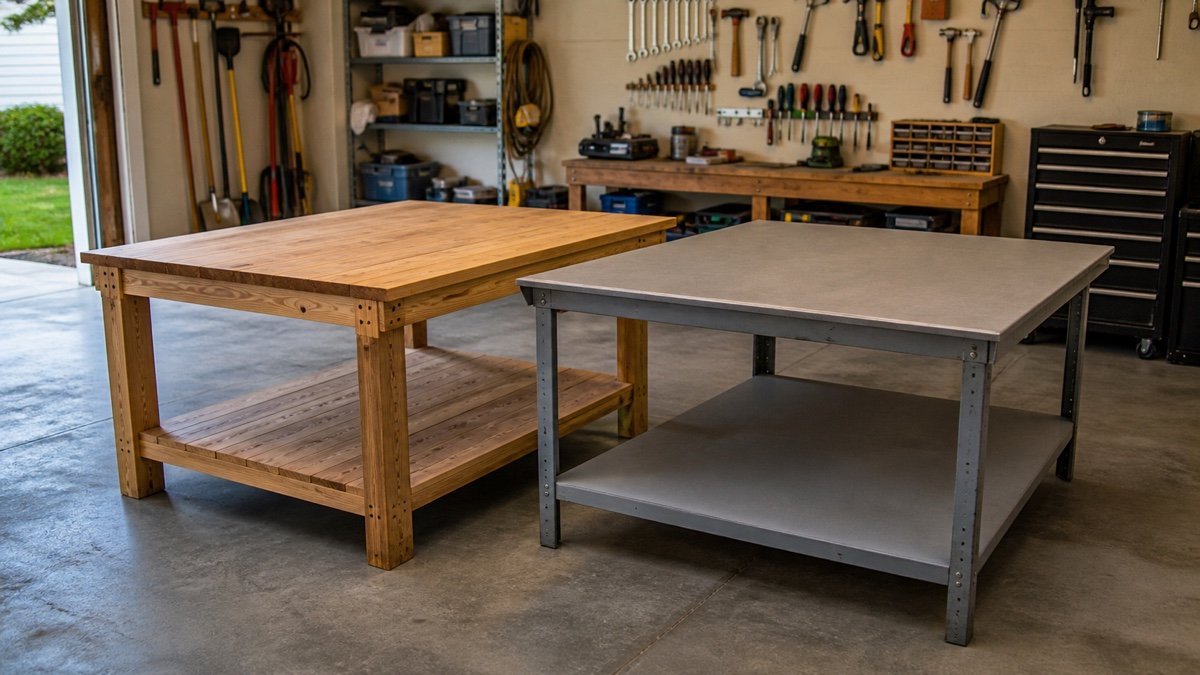
A wood vs steel workbench decision looks simple until the frame, top, and actual job are separated. A wood top can sit on a steel base. A steel top can be added to one end of a timber bench. Either material can be sturdy, awkward, quiet, loud, repairable, or expensive depending on thickness and construction. Start with the work you do every month, then judge clamping, moisture, sparks, noise, and repair. The result should fit the room and the routine, not merely match the cabinets.
Quick answer
Choose a thick wood top when you clamp irregular parts, assemble furniture, want a quieter surface, or expect to flatten and refinish the bench later. Choose a steel top for oily components, abrasive work, and jobs that benefit from a nonporous surface. Many home garages work well with a rigid steel base, a replaceable wood top, and a removable metal tray used only for dirty or oily parts. Hot work needs a purpose built, noncombustible welding setup approved for the process.
Wood vs steel workbench comparison by task
Compare how each bench behaves during your routine work; abstract material strength does not answer that. A thick hardwood slab spreads impacts differently from thin sheet steel. A welded frame resists racking differently from a bolted timber base. Read a capacity number only after checking whether it describes an evenly distributed static load or a concentrated working load.
| Decision factor | Wood top and base | Steel top and base | Common hybrid |
|---|---|---|---|
| Woodworking clamps | Easy to add dog holes and holdfasts | Usually needs edge access or fixtures | Wood top on steel frame |
| Hot work | Combustible and unsuitable as a welding surface | Use only when the bench is designed and approved for the process | Use a separate purpose built, noncombustible welding setup |
| Noise | Absorbs more impact sound | Can ring, especially with hollow panels | Wood top with rigid metal base |
| Surface repair | Flatten, fill, sand, or replace | Dress burrs, repair coating, or replace panel | Replaceable sacrificial skin |
| Moisture response | Moves and can swell if unfinished | Can rust where coating is damaged | Sealed top and coated frame |
| Best fit | Assembly, carving, hand tools | Mechanical work and oily parts | Mixed household workshop |
If you are still deciding on size and bench type, the broader garage workbench buying guide puts material beside depth, height, mobility, and storage.
Separate the worktop from the base
A bench is a system, not one material. The top handles impacts, clamps, spills, and abrasion. The base handles racking, floor contact, drawers, and the load path to the slab. That distinction opens better combinations. A welded or heavily bolted steel frame can provide stiffness without making every dropped wrench ring against metal. A laminated maple or beech top then gives a forgiving, renewable work surface.
The opposite combination is less common but still useful. A timber base can carry a sheet steel skin over a solid substrate for occasional mechanical work. The skin needs fully supported edges so it does not drum or curl. Before buying, look for the top thickness, frame gauge or section size, cross bracing, fastener access, and replacement part availability. A large advertised capacity cannot rescue a flexible top or a base that racks sideways.
Wood wins when clamping is part of the job
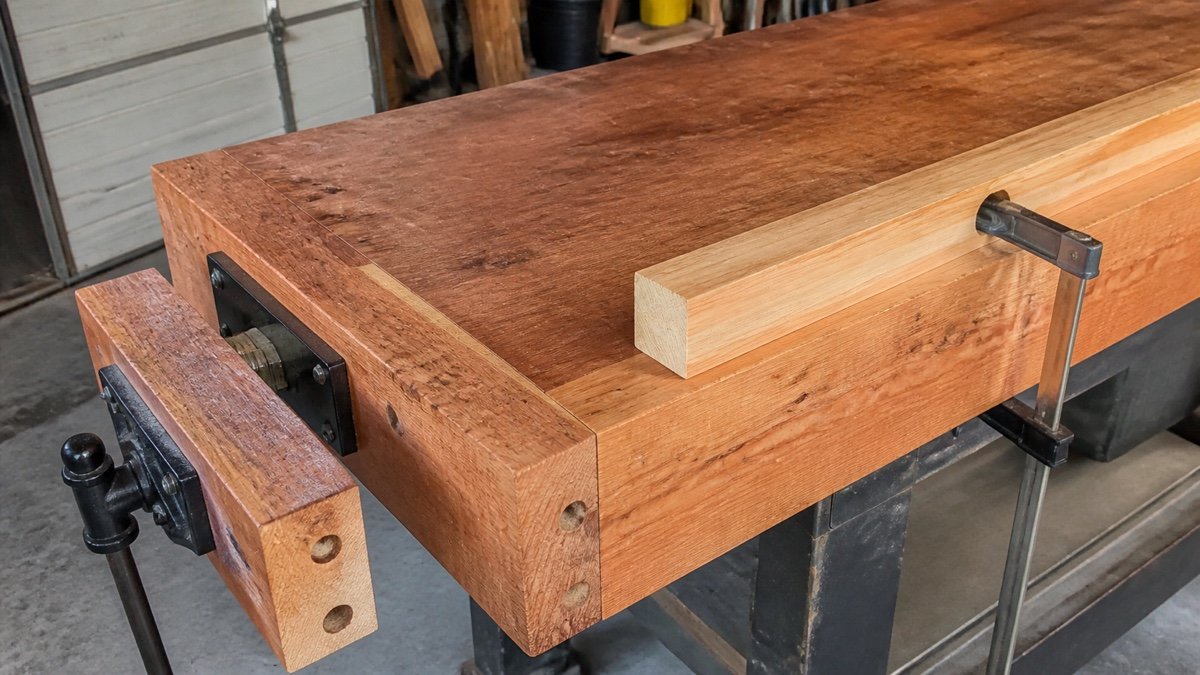
Wood is unusually easy to adapt. You can drill dog holes, add a face vise, screw down a temporary stop, cut a clearance notch, or replace a damaged strip. That freedom matters for cabinet parts, frames, small repairs, sharpening, and household assembly. Thick tops also give holdfasts enough material to grip. Softwood construction lumber can work for a budget bench, but it dents readily and may twist as it dries. Laminated hardwood costs more yet provides a flatter, longer wearing surface.
Think about clamp reach before choosing depth. A 30 inch top sounds generous, but a normal clamp cannot reach the center from an edge. Dog holes, T tracks, or a split top solve that problem. Keep the underside of the edge clear where bar clamps must land. Drawers and aprons often occupy the exact space a clamp jaw needs, which is why a plain wood edge can be more useful than a crowded fascia.
Use purpose built equipment for hot work
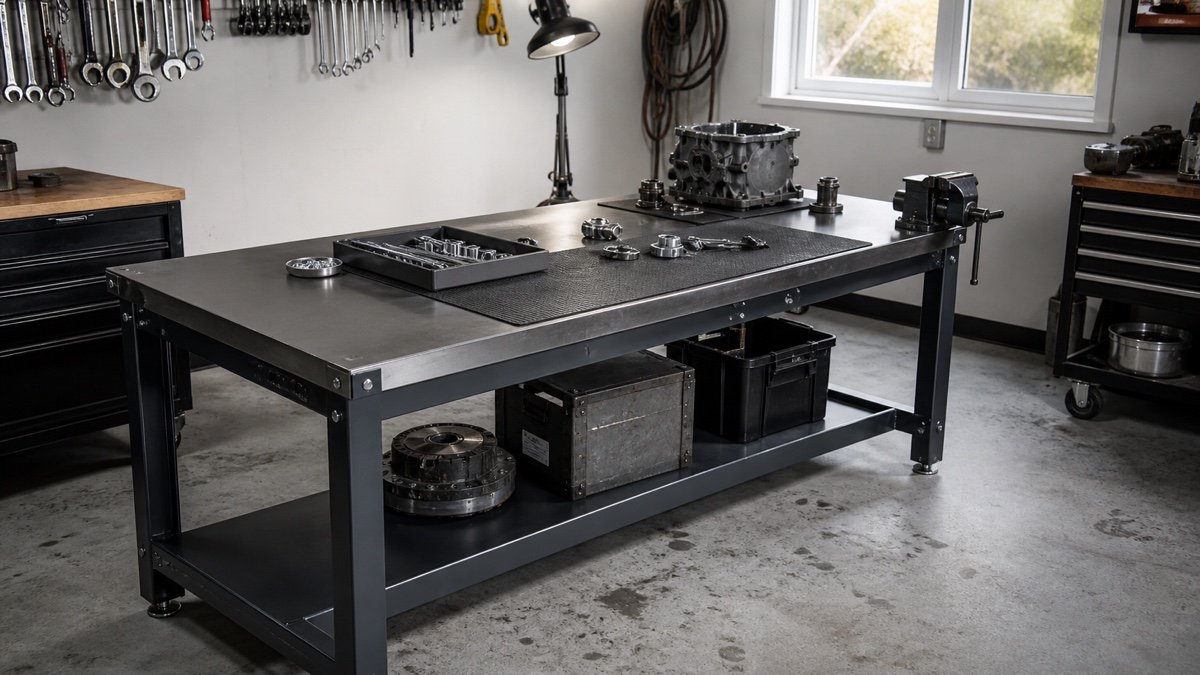
A smooth steel surface is easier to wipe after oily mechanical work, and it does not absorb solvents the way unfinished timber can. It also tolerates sharp metal parts and abrasive grit better than a furniture grade wood top. Hot work is a different decision. A loose steel plate over timber can conduct heat into the combustible top, so it does not turn a wood bench into a welding station. Sparks can still reach drawers, cardboard, sawdust, fuel, finishes, and wall storage. Coatings may burn as well.
OSHA’s fire prevention rules for welding and cutting require combustible material to be moved or protected and suitable fire extinguishing equipment to be ready. Its arc welding rules treat the work lead and equipment grounding as separate matters: the work lead must be firmly attached to the work, while the welding machine frame has its own grounding requirements. Follow the welder manual and use a purpose built, noncombustible table approved for the process. Do not use a utility bench, building metal, or an improvised plate as the welding current return path.
Repairability changes the lifetime cost
A scarred workbench is not automatically worn out. Wood can be resurfaced if enough thickness remains. Shallow cuts can be filled, high spots planed, and a sacrificial hardboard layer replaced cheaply. Fasteners should stay below the future flattening depth. A glued laminated slab takes more effort to repair than a loose replaceable panel, but both are approachable with ordinary woodworking tools.
Steel repair depends on the construction. Small burrs can be dressed carefully. Damaged paint needs cleaning and recoating before rust spreads. A dent in thin formed sheet can be difficult to make flat again, while a thick plate can sometimes be ground or machined. Welded frames are durable but less convenient to modify without fabrication tools. Bolted frames are easier to disassemble, though their joints need periodic inspection. Include replacement tops and hardware when comparing two benches instead of stopping at the initial carton price.
Noise and vibration are daily comfort issues
Steel benches often sound harsher because broad panels and empty cabinets act like resonators. A dropped socket can produce a sharp ring that carries into the house. Wood dampens that impact and feels warmer under small parts. The difference is noticeable in an attached garage used early in the morning or late at night.
Construction matters as much as material. A thick steel plate on a rigid frame behaves differently from a light folded panel. Drawer liners, rubber feet, a dense top substrate, and securely fastened panels can reduce noise. Do not use soft isolation pads where they make a tall bench unstable. Fix rattles at loose fasteners first. If quiet work is the priority, a wood top over a braced metal frame usually offers a sensible balance of stiffness and sound control.
Moisture, rust, movement, and electrical concerns
Garage humidity punishes both materials in different ways. Unsealed wood exchanges moisture with the air. Wide boards may cup, joints can open, and end grain can absorb spills quickly. Seal all faces, including the underside and edges, while accepting that seasonal movement still occurs. Keep timber feet out of standing water and leave wet rags somewhere safer than the worktop.
Steel needs intact coating and dry contact points. Scratches, welds, fastener holes, and the bottom of legs deserve inspection. Salt carried in by a winter vehicle accelerates corrosion. Conductivity creates another distinction. A metal bench can become part of an unintended electrical path, so damaged cords and improvised grounding are especially poor companions. Route power where plugs stay visible and protected. Pairing the bench with closed storage may help; our comparison of metal vs plastic garage cabinets explains how humidity and chemical storage affect that choice too.
Total cost includes the room around the bench
The cheapest bench can become expensive if it needs a new top, extra bracing, casters, clamp accessories, lighting, and wall storage before it works. List the complete station. Include delivery, assembly hardware, floor leveling, a vise, task lighting, power routing, drawer liners, protective finish, and any sacrificial surface. Then estimate which parts may need replacement over five years.
A wood bench often asks for finish and occasional flattening. A steel bench may need coating repair, liners, or noise control. Heavy welded units can also cost more to move. Put every item into the garage storage budget calculator, including the storage that would otherwise migrate onto the worktop. That produces a more honest comparison than selecting the highest capacity number at the lowest sticker price.
Hybrid workbenches suit mixed garages
Most home garages do not perform one trade all week. The same surface may hold a bicycle hub on Saturday, a cabinet door on Sunday, and a leaking garden tool on Monday. A steel base with a thick replaceable wood top handles that variety well. Add a removable steel work plate or shallow metal tray for oily parts, but never use that plate for welding or other hot work over timber. Store it vertically when woodworking so metal grit cannot scratch the next project.
Another practical arrangement uses two zones on one long bench. Keep a vise and dog holes at the wood end, with a steel covered service area at the other. Reserve actual welding for a separate noncombustible setup. Do not split the surface so narrowly that neither zone can hold the usual workpiece. If the wall also carries tools, map the bench against your garage wall storage system. Doors, bins, and long handled tools must clear the work surface and your head.
A short decision sequence before you buy
Write down the three jobs that occupy the bench longest, not the exciting project that happens once a year. Note the largest workpiece, the clamp style, expected spills, heat, impacts, and cleanup method. Decide whether the surface must accept holes or screws. Then choose the top. Next choose a base that resists racking at the required width and leaves room for knees, drawers, or clamp jaws.
Finally, check the garage itself. Measure floor slope, outlets, door travel, vehicle clearance, and the route from delivery point to final position. Read the exact product manual for assembly, loading, anchoring, and electrical limits. A wood vs steel verdict reached in this order tends to be durable because it follows the work. Color, drawer count, and matching cabinets can come afterward.
Useful products to compare
These links open current Amazon search results so you can compare dimensions, manuals, ratings, and availability for the exact models on your shortlist.
Before you buy or install
Check the current manual for the exact product you are considering. Confirm the assembled dimensions, load rules, mounting requirements, included hardware, clearances, warranty, and any limits that apply to your wall, floor, or garage layout.
Frequently asked questions
Is a steel workbench stronger than a wood workbench?
Not automatically. Strength depends on top thickness, frame design, joints, bracing, fasteners, and how the load is applied. Compare the manufacturer’s load wording and the bench’s resistance to sideways racking. A thick wood slab on a rigid base may feel more solid than a light steel bench with thin formed panels.
Can I weld on any steel workbench?
No. A painted steel utility bench is not necessarily designed as a welding table. Confirm that the manufacturer approves the exact use, remove or protect combustibles, and follow the welder manual. The welding work lead must attach to the work as instructed; it is not the same thing as grounding the welding machine frame. Use a purpose built, noncombustible welding setup for hot work.
What wood is best for a garage workbench top?
Laminated maple and beech are durable, flat, and renewable, while construction softwood can make an affordable working bench that is easy to repair. Plywood or MDF can be used as a replaceable sacrificial layer over a strong substrate. Choose based on clamping needs, humidity, budget, and willingness to refinish it.
Does a steel frame with a wood top make sense?
Yes. It combines a stiff, compact base with a quieter surface that accepts common woodworking fixtures. Check how the top attaches, whether movement is allowed, and whether clamp jaws can reach the edges. Add a removable metal tray or plate if occasional oily work would otherwise soak into the wood.