Tag: comparison

  • Wire vs Solid Garage Shelving

    Wire vs Solid Garage Shelving

    Affiliate disclosure: As an Amazon Associate I earn from qualifying purchases. This article may contain affiliate links, and Bay & Bench may earn a commission at no extra cost to you. Read our full Affiliate Disclosure.

    Wire lets air and dust pass through. Solid decks keep small parts and spills on the shelf. The better surface depends on what can fall, leak, snag, or need wiping in that particular zone.

    Quick answer

    Choose wire for bins, airflow, and areas where loose dust should not collect on the deck. Choose solid shelves for small hardware, bottles, and objects that need a flat sliding surface. Add fitted trays or liners only when the shelf maker permits them.

    Wire vs Solid Garage Shelving
    Planning example for wire vs solid garage shelving.

    Wire is open by design

    Wire shelves expose the underside of every object to air and let loose dirt fall. That can help around closed totes. Narrow feet, small boxes, and loose fasteners may sit badly or fall through.

    Some plastic bins drag or catch on wire, especially when heavily loaded.

    Solid shelves contain the mess

    A solid surface supports small items and makes it easier to slide boxes. It also catches every drip. That is useful only if the deck tolerates the liquid and can be cleaned before moisture spreads.

    Composite decks need special care in damp garages. Check edges and coating rather than assuming every solid shelf is washable.

    Spills change the decision

    Do not rely on either shelf to contain hazardous products. Store chemicals according to their labels and use compatible secondary containment. A wire shelf can let a leak reach everything below; a flat deck can let it spread sideways.

    Surface comparison

    UseWireSolid
    Closed totesGood airflowEasy sliding
    Small hardwareNeeds bins or trayFlat support
    DustFalls to lower levelsCollects on deck
    Liquid leakPasses throughMay pool or spread
    Narrow feetCan wobbleUsually steadier

    Liners can make a hybrid

    A rigid fitted liner gives wire shelving a smoother zone for small items. Check that it does not interfere with clips, ventilation, fire requirements, or the manufacturer’s load assumptions. Avoid makeshift cardboard where moisture or chemicals are present.

    Match surfaces to shelves

    You may not need one answer for the whole rack. Use trays for hardware, closed bins for loose parts, and open wire for bulky dry containers. The object should dictate the local surface.

    Pair this decision with the shelving buying guide and the shelving planner.

    Noise and stability are easy to overlook

    Metal containers and tools can rattle on wire. Narrow legs may rock between rods. A fitted tray can quiet a local work zone, while closed bins solve many small-item problems without covering the entire shelf.

    Solid decks feel steadier under small objects, but a slick surface may let bins slide when bumped. Shelf lips and bin feet matter.

    Cleaning happens below the shelf too

    Dust that falls through wire does not disappear. It lands on lower objects or the floor. Solid shelves keep each level separate but require wiping. Decide which cleaning pattern suits the stored goods.

    Use shallow removable trays under messy items. They are easier to wash than dismantling a full shelf and make leaks visible sooner.

    Useful products to compare

    Use these searches to compare current dimensions, ratings, manuals, and availability. Check the exact model before buying.

    Before you buy or install

    Download the current manual for the exact model. Confirm assembled and packaged dimensions, individual and total load ratings, required clearances, mounting structure, included hardware, warranty, and inspection instructions. Product listings and specifications can change.

    Mark the footprint or platform edges in the garage. Operate the vehicle doors and garage door, carry the intended bin through the access route, and check service panels and utilities. Do not improvise around electrical, gas, fire, or structural conditions.

    Frequently asked questions

    Can I put a liner on wire shelving?

    Often, but use a fitted product compatible with the shelf and do not block required ventilation or connections.

    Which surface is easier to clean?

    Solid washable decks are easy to wipe. Wire has more individual rods but does not hold as much loose dust on one level.

    Which is better for paint cans and bottles?

    A stable solid surface or compatible tray is usually easier, but store every product according to its label and use secondary containment where needed.

    Last reviewed: July 2026. Verify current product specifications and installation requirements before purchase.
  • Steel vs Resin Garage Shelving

    Steel vs Resin Garage Shelving

    Affiliate disclosure: As an Amazon Associate I earn from qualifying purchases. This article may contain affiliate links, and Bay & Bench may earn a commission at no extra cost to you. Read our full Affiliate Disclosure.

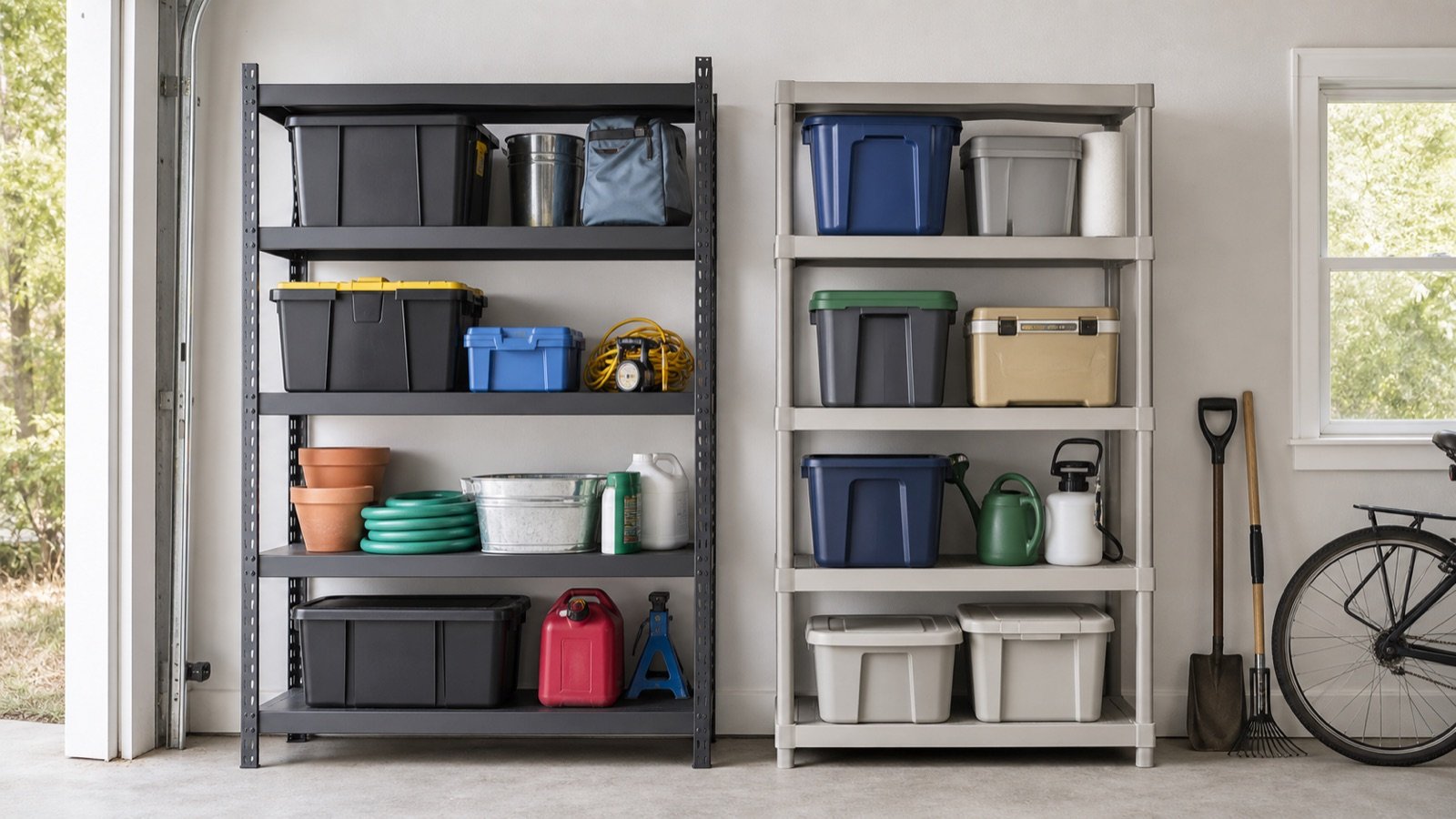
    Steel is the usual choice for dense tools and long shelf spans. Resin is easy to wash and will not rust. Either material can disappoint when the shelf dimensions or published ratings do not match the load.

    Quick answer

    Choose steel for compact heavy objects and broad modular choices, after checking finish and corrosion conditions. Choose resin for damp, washable storage and lighter household goods. Compare exact per shelf ratings and restraint instructions.

    Steel vs Resin Garage Shelving
    Planning example for steel vs resin garage shelving.

    Material does not replace specifications

    A thin steel shelf may carry less than a well-designed resin shelf. A thick resin frame may still creep under heat or long-term loading. Product geometry, span, bracing, and rating matter more than a one-word material label.

    Where steel makes sense

    Steel racks are common around power tools, automotive supplies, and dense bins. Adjustable boltless designs can offer many shelf positions. Scratched finishes and damp floors deserve attention, so inspect contact points and follow care instructions.

    Where resin is pleasant to own

    Resin units are often light to move before loading and simple to wipe down. Molded shelves do not have a coating that can rust. They suit sports gear, cleaning supplies, and household bins when the stated ratings fit.

    Daily differences

    FactorSteelResin
    Dense loadsMany strong optionsVerify span and rating
    Water cleanupFinish needs careUsually simple to wash
    AssemblyMay need mallet or fastenersOften press fit
    AdjustabilityCommon on many systemsVaries, sometimes fixed
    Unit weightOften heavierOften lighter

    Check stability

    Tall shelving needs a flat footing and correct assembly regardless of material. Keep heavy items low and use wall restraint when the instructions call for it. Do not assume a light resin unit is safe to leave unrestrained or that a heavy steel unit cannot tip.

    Choose by storage zone

    A garage does not need one material everywhere. Steel can handle the tool zone while resin serves a damp garden or cleaning zone. Keep incompatible chemicals separated according to their labels.

    Continue with the garage shelving buying guide to compare dimensions and shelf surfaces.

    Temperature and sunlight matter

    Garages can become hot, and direct sun near an open door can warm one side of a rack. Read the product guidance for environmental limits. Resin response to heat and steel coating durability vary by design.

    Keep both materials away from sources of heat or chemicals that their documentation does not permit.

    Moving the unit later

    Resin sections may be light enough to reposition while empty. Steel systems can be heavier but may offer boltless parts that separate. Neither should be dragged while loaded.

    If you expect frequent layout changes, look at the empty unit weight, disassembly instructions, and availability of replacement clips or shelves.

    Useful products to compare

    Use these searches to compare current dimensions, ratings, manuals, and availability. Check the exact model before buying.

    Before you buy or install

    Download the current manual for the exact model. Confirm assembled and packaged dimensions, individual and total load ratings, required clearances, mounting structure, included hardware, warranty, and inspection instructions. Product listings and specifications can change.

    Mark the footprint or platform edges in the garage. Operate the vehicle doors and garage door, carry the intended bin through the access route, and check service panels and utilities. Do not improvise around electrical, gas, fire, or structural conditions.

    Frequently asked questions

    Does resin shelving sag?

    Any shelf can deflect when the load, span, heat, or long-term use exceeds its design. Follow the exact rating and distribution rules.

    Will steel shelves rust in a garage?

    Damage, condensation, salt, and finish quality affect corrosion. Inspect the coating and keep the feet out of standing water.

    Can I mix steel and resin shelves?

    Yes. Choosing each unit for its storage zone is often more sensible than forcing one material throughout the garage.

    Last reviewed: July 2026. Verify current product specifications and installation requirements before purchase.
  • 18 vs 24-Inch-Deep Garage Shelves

    18 vs 24-Inch-Deep Garage Shelves

    Affiliate disclosure: As an Amazon Associate I earn from qualifying purchases. This article may contain affiliate links, and Bay & Bench may earn a commission at no extra cost to you. Read our full Affiliate Disclosure.

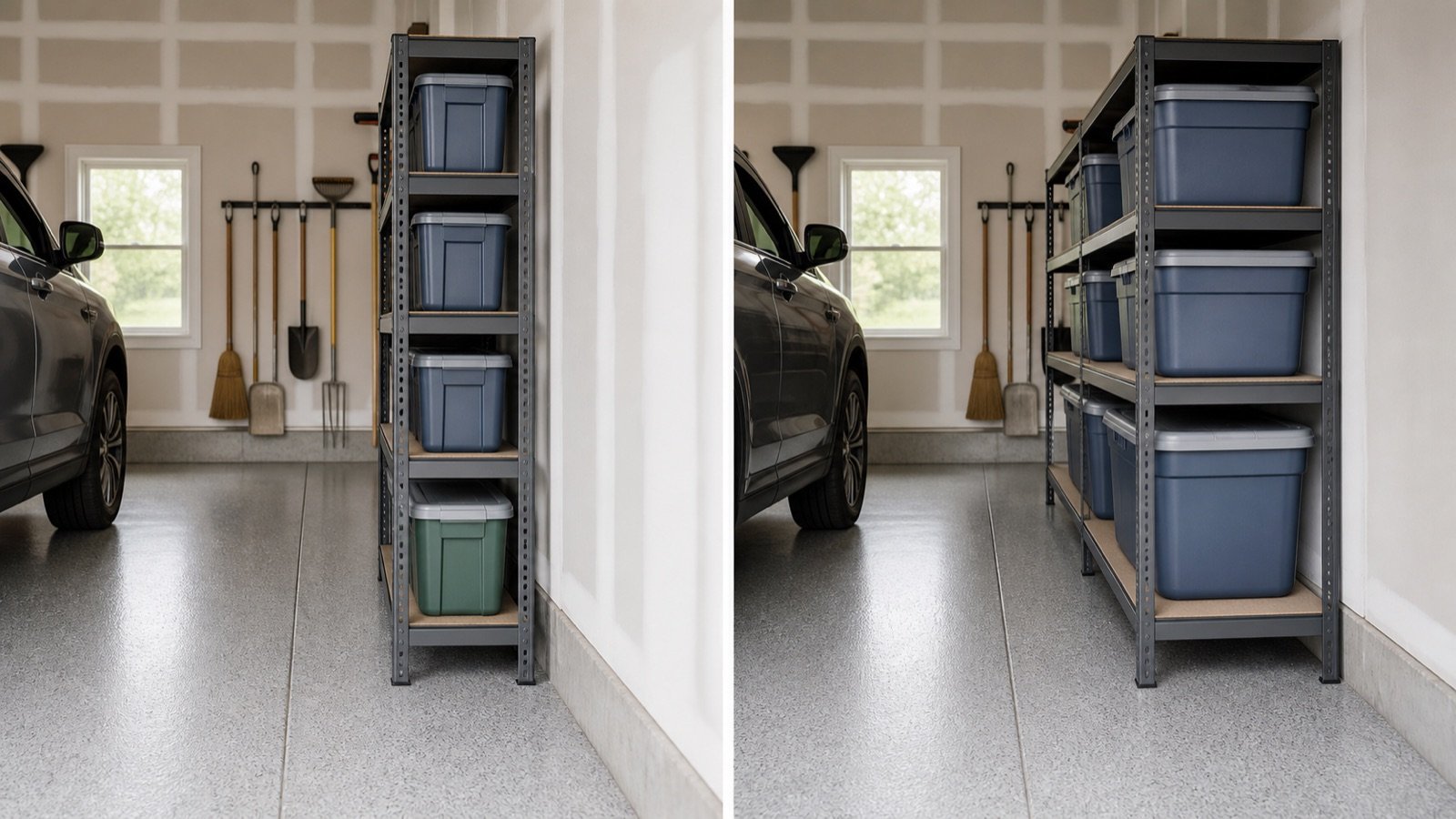
    Six inches sounds minor until it runs beside a parked car for eight feet. Shelf depth affects the aisle every day, while extra capacity matters only when the objects use it.

    Quick answer

    Choose 18 inch shelves for tighter parking, medium bins, and better visibility. Choose 24 inch shelves for genuinely deep totes and bulky gear, provided the aisle and reach still work. Measure usable deck depth, not just the product name.

    18 vs 24-Inch-Deep Garage Shelves
    Planning example for 18 vs 24-inch-deep garage shelves.

    Tape both footprints

    Mark 18 and 24 inches from the wall, including any base gap or upright projection. Park the vehicle and walk the route carrying the largest tote. Open the nearest car door.

    The better depth is the one that passes this test without forcing awkward movement.

    What 18 inches does well

    Shallow shelves make labels easier to see and reduce double rows. They suit many medium bins, tool cases, gardening supplies, and household stock. Less depth also discourages forgotten objects at the back.

    When 24 inches earns its space

    Large totes, coolers, shop equipment, and wide automotive gear may need the deeper deck. Confirm that the object sits fully supported and fits between the uprights.

    Do not buy deep shelves for future capacity without naming the objects that will occupy it.

    Compare the tradeoffs

    Factor18 inch24 inch
    Aisle usePreserves 6 inchesConsumes 6 more inches
    VisibilityEasier single rowsMore chance of hidden items
    Large tote fitMay leave overhangOften better, verify exact tote
    ReachEasy to reach rearHarder on high shelves

    Use mixed depths carefully

    A deep rack at the back wall and shallow shelving beside the vehicle can make sense. Keep transitions visible so shoulders and carried bins do not catch a projecting corner.

    Measure the usable shelf

    Frames, lips, braces, and uprights can reduce usable space. Check the clear depth and opening in the manual. Then enter the wall and unit dimensions in the shelving planner.

    The broader buying guide covers materials and ratings.

    High shelves make depth harder to use

    Deep storage above eye level hides labels and pushes the rear row beyond comfortable reach. A 24 inch deck that works at waist height can be irritating near the top of the rack. Plan depth and shelf height together.

    If deep upper shelves are unavoidable, use one light pull-forward bin per position instead of loose objects in two rows.

    Calculate capacity with real bins

    Divide usable shelf width by the loaded bin width, then check depth and opening height. Repeat for every shelf. Marketing photos often use containers chosen to make the rack look full; your bin family may leave large gaps.

    A cardboard template of the shelf opening is a quick way to test handles and lids in the store or garage.

    Useful products to compare

    Use these searches to compare current dimensions, ratings, manuals, and availability. Check the exact model before buying.

    Before you buy or install

    Download the current manual for the exact model. Confirm assembled and packaged dimensions, individual and total load ratings, required clearances, mounting structure, included hardware, warranty, and inspection instructions. Product listings and specifications can change.

    Mark the footprint or platform edges in the garage. Operate the vehicle doors and garage door, carry the intended bin through the access route, and check service panels and utilities. Do not improvise around electrical, gas, fire, or structural conditions.

    Frequently asked questions

    Will an 18 inch tote fit an 18 inch shelf?

    Not necessarily. Measure the tote at its widest point and compare it with the usable deck and upright opening.

    Can bins overhang the shelf?

    Follow the shelf and bin instructions. Overhang can reduce stability and make retrieval awkward.

    Which depth is better for a one car garage?

    Often 18 inches, but only a parked vehicle and tape mockup can confirm the room.

    Last reviewed: July 2026. Verify current product specifications and installation requirements before purchase.

  • Fixed vs Adjustable Overhead Garage Racks

    Fixed vs Adjustable Overhead Garage Racks

    Affiliate disclosure: As an Amazon Associate I earn from qualifying purchases. This article may contain affiliate links, and Bay & Bench may earn a commission at no extra cost to you. Read our full Affiliate Disclosure.

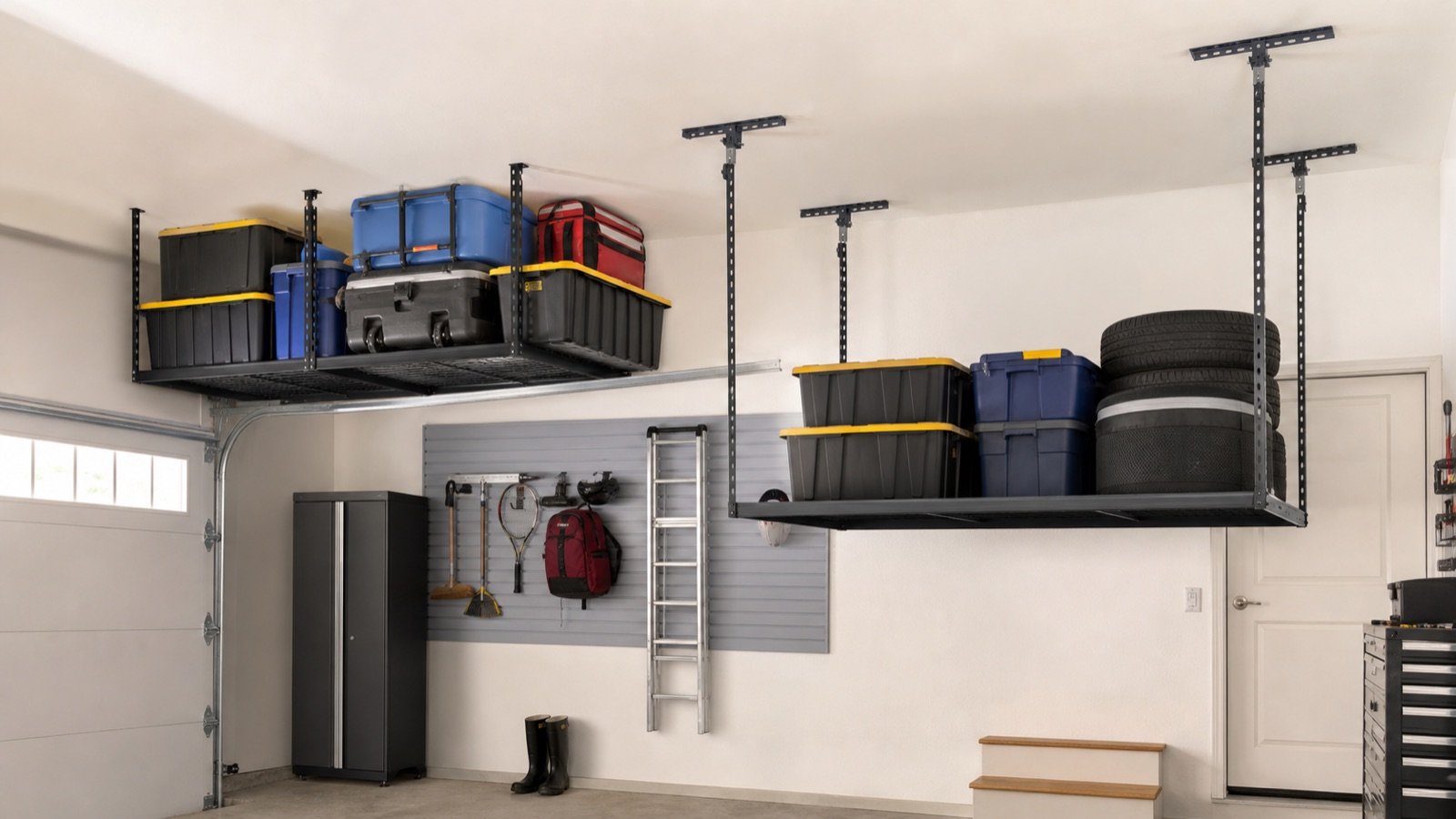
    Adjustability is useful when it solves a measured problem. If every support ends up at the same height and never moves again, a simpler fixed setup may be the cleaner choice.

    Quick answer

    Choose adjustable drop supports when ceiling height, obstructions, or tote sizes demand a specific platform level permitted by the manual. Choose fixed supports when the required height is known, the mounting plane is straightforward, and fewer joints suit the application.

    Fixed vs Adjustable Overhead Garage Racks
    Planning example for fixed vs adjustable overhead garage racks.

    What adjustable usually means

    Many adjustable racks use slotted vertical posts with a set of approved hole positions. Adjustment is not continuous, and the allowed range may change with rack size or configuration. Read the exact manual before assuming a desired drop is available.

    Where adjustment helps

    A measured drop can place the platform above an open door while preserving tote space. Separate approved settings may also help with a sloped ceiling or a beam, although every support and connection must follow the instructions.

    The clearance guide shows which dimensions to collect.

    Why fixed can be appealing

    Fixed hardware has fewer adjustment points and fewer opportunities to choose the wrong hole. That simplicity can make inspection easier. It does not remove the need for correct structure, fasteners, leveling, and load distribution.

    Side by side

    FactorFixedAdjustable
    Drop choicesOne designed heightApproved positions within a range
    Changing totesMay require new storage planMay permit a different setting
    PartsOften fewer jointsMore connection points to inspect
    Uneven geometryLess flexibleCan offer approved correction

    Do not plan on frequent adjustment

    A loaded ceiling rack is not a height adjustable desk. Changing the drop normally means unloading, supporting, loosening, aligning, and reinstalling parts according to the manual. Choose a setting you expect to keep.

    Decision rule

    Measure the lowest obstruction and the loaded tote. If one fixed configuration gives comfortable handling room and clearance, extra adjustment may add little. If the fit depends on a narrow height window, an adjustable model can be worth comparing.

    Whatever you choose, record the final setting and include it in periodic inspections.

    Adjustment can create setup errors

    More holes mean more possible configurations to verify. Count exposed holes or measure the final drop at every post before loading. Photograph the connections so a later inspection can tell whether anything moved.

    Use only approved fasteners and hole positions. A post that looks nearly aligned should not be forced into a custom setting.

    Future vehicles are worth one measurement

    If you expect to replace a sedan with an SUV, record the likely roof and hatch height before settling on a low rack. This does not justify buying excess adjustment. It simply prevents a platform from locking the garage to the current vehicle.

    Changing the rack later may be possible, but unloading and reinstalling it is work. A sensible initial height is cheaper.

    Useful products to compare

    Use these searches to compare current dimensions, ratings, manuals, and availability. Check the exact model before buying.

    Before you buy or install

    Download the current manual for the exact model. Confirm assembled and packaged dimensions, individual and total load ratings, required clearances, mounting structure, included hardware, warranty, and inspection instructions. Product listings and specifications can change.

    Mark the footprint or platform edges in the garage. Operate the vehicle doors and garage door, carry the intended bin through the access route, and check service panels and utilities. Do not improvise around electrical, gas, fire, or structural conditions.

    Frequently asked questions

    Can I change rack height after installation?

    Only as the manufacturer permits. Unload the rack and follow the adjustment procedure rather than moving loaded supports.

    Are fixed racks stronger?

    Not automatically. Compare the exact published ratings and required configuration.

    Can adjustable posts handle a sloped ceiling?

    Some systems may accommodate certain layouts, but the manual must explicitly support the installation.

    Last reviewed: July 2026. Verify current product specifications and installation requirements before purchase.

  • 2×4 vs 4×8 Overhead Garage Rack: Which Size Fits Better?

    2×4 vs 4×8 Overhead Garage Rack: Which Size Fits Better?

    Affiliate disclosure: As an Amazon Associate I earn from qualifying purchases. This article may contain affiliate links, and Bay & Bench may earn a commission at no extra cost to you. Read our full Affiliate Disclosure.

    A 4×8 rack offers four times the platform area of a 2×4 rack. That does not make it four times as useful. Reach, ceiling obstructions, tote layout, and mounting locations decide how much of the deck you can use.

    Quick answer

    Choose 2×4 when the ceiling is broken up by lights, doors, or access points, or when you want easy reach from one side. Choose 4×8 when you have a verified open mounting zone, enough loading access, and a tote plan that uses the center of the platform.

    2x4 vs 4x8 Overhead Garage Rack: Which Size Fits Better?
    Planning example for 2×4 vs 4×8 overhead garage rack: which size fits better?.

    The area difference is large

    A nominal 2×4 platform covers 8 square feet. A 4×8 covers 32. Map both rectangles on the floor and arrange the totes you already own. This reveals gaps caused by lids, handles, and incompatible bin sizes.

    Compare actual outside dimensions, since frames and extensions may not match the nominal label exactly.

    Reach can waste the middle

    A small rack can often be loaded from one stable ladder position. A broad 4×8 platform may require access from more than one edge. If walls, vehicles, or cabinets block those positions, the center becomes dead space or encourages unsafe reaching.

    Plan the ladder footprint before celebrating the extra capacity.

    Small racks work around obstacles

    Two smaller racks can sit in separate clear ceiling bays and leave a light, opener, or attic access untouched. They also allow different drop heights where the ceiling changes.

    A single large rack looks cleaner and may use fewer separate frames, but it gives you less freedom once the mounting zone is chosen.

    Compare before buying

    Question2×4 rack4×8 rack
    Platform area8 sq ft nominal32 sq ft nominal
    Typical reachEasier from one edgeOften needs multiple access points
    Obstacle avoidanceFlexible placementNeeds a broad clear zone
    ExpansionAdd another module laterLarge commitment at once
    Tote planningFew rowsCenter arrangement matters

    Capacity is not just deck area

    The larger rack may have a higher published capacity, but the building structure remains separate. Do not assume that doubling platform length doubles the load a ceiling location should carry. Review the weight guide.

    A practical decision

    Start with the smallest platform that holds the intended seasonal items. If you still need more room, decide whether another small rack in a different bay is easier to reach than one deep platform.

    Run both options through the clearance calculator and tape the platform edges overhead with visible wall marks.

    Think in reachable rows

    Platform area is less useful than reachable tote positions. Sketch the rack as rows of your actual bins and mark which edge each row is loaded from. A 4×8 plan with inaccessible center bins may offer less working capacity than two smaller platforms with clear approaches.

    Leave labels facing the access edge. Rotating bins overhead wastes time and encourages reaching beyond a stable position.

    Price the complete layout

    Compare delivered cost, extension pieces, extra supports, required accessories, and any installation help. Two small racks may cost more per square foot, while one large platform may require a more difficult mounting and loading plan.

    Cost per square foot is useful only after both options pass the clearance, access, and structural checks.

    Useful products to compare

    Use these searches to compare current dimensions, ratings, manuals, and availability. Check the exact model before buying.

    Before you buy or install

    Download the current manual for the exact model. Confirm assembled and packaged dimensions, individual and total load ratings, required clearances, mounting structure, included hardware, warranty, and inspection instructions. Product listings and specifications can change.

    Mark the footprint or platform edges in the garage. Operate the vehicle doors and garage door, carry the intended bin through the access route, and check service panels and utilities. Do not improvise around electrical, gas, fire, or structural conditions.

    Frequently asked questions

    How many totes fit on a 4×8 rack?

    It depends on actual platform dimensions and the loaded tote footprint. Lay the totes inside a 4×8 floor outline before buying.

    Are two 2×4 racks the same as one 4×8?

    No. Two 2×4 platforms provide half the nominal area of one 4×8, although separate placement may be more useful.

    Which size is easier to install?

    Size alone does not decide installation difficulty. Package weight, ceiling access, mounting layout, and the manual matter.

    Last reviewed: July 2026. Verify current product specifications and installation requirements before purchase.