Affiliate disclosure: As an Amazon Associate I earn from qualifying purchases. This article may contain affiliate links, and Bay & Bench may earn a commission at no extra cost to you. Read our full Affiliate Disclosure.
A rack marked 600 pounds does not turn an unknown ceiling into a 600 pound support. The product rating, installation hardware, mounting pattern, and building structure form one chain. The weakest part sets the limit.
Quick answer
Use the lowest verified limit in the complete system. Add the rack weight to the stored load, spread contents as instructed, weigh loaded totes, and never infer ceiling capacity from the rack label.
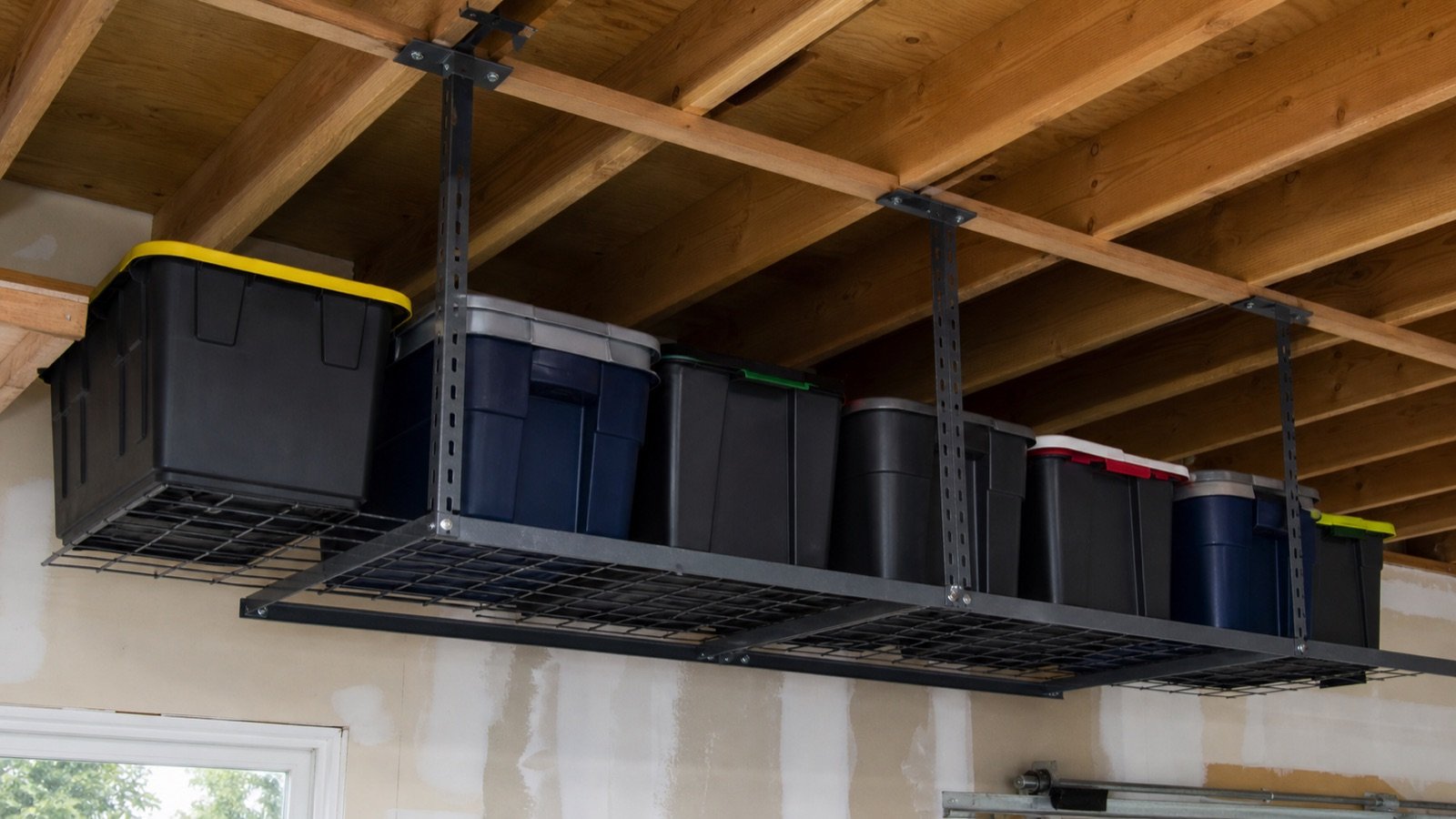
Separate the four limits
- The rack frame and deck have a published rating.
- Connections between rack parts have their own conditions.
- Fasteners and mounting plates depend on correct installation.
- The building structure must accept the added load.
A strong platform can still be poorly mounted. A sound ceiling can still be paired with the wrong fastener. Keep the four questions separate.
Read the exact wording
Look for phrases such as evenly distributed load, per rack, per section, static load, and maximum combined capacity. Check whether accessories or extension sections change the rating. Use the current manual for the exact model number.
Do not divide a headline number among hangers unless the manufacturer provides that method.
Weigh the tote, not the guess
Plastic bins hide weight surprisingly well. Put each loaded tote on a bathroom or shipping scale and write the weight on the label. Include lids and loose items on the platform.
Store the lightest totes overhead. A bin of winter clothing behaves very differently from the same bin filled with metal parts.
Distribution changes the stress
Even distribution means more than placing one tote near each corner. Dense loads should not sit on a small patch of wire deck unless the instructions allow it. Keep weight balanced and avoid point loads from narrow feet.
Recheck the rack after loading. Stop if you see movement, deformation, loosened hardware, or new ceiling damage.
Make a load sheet
| Item | Record |
|---|---|
| Rack | Model, empty weight, stated capacity |
| Totes | Individual loaded weights |
| Loose items | Weight and contact area |
| Mounting | Required structure and hardware |
| Inspection | Date and any movement or damage |
Know when to stop
If joist direction, spacing, condition, or access is unclear, do not improvise. The buying guide can help choose a format, but it cannot certify a ceiling. Ask a qualified professional to assess uncertain structure.
Keep hazardous liquids, batteries, fuel, and materials affected by heat out of overhead storage unless their labels and local rules clearly permit that location.
Create a conservative loading routine
Give every overhead tote a maximum household weight below the verified system limit and write it on the label. Weigh the bin whenever its contents change. This is more reliable than trying to remember which black tote contains fabric and which one contains hardware.
Load from the supports toward open deck areas as the manual directs, and keep the platform balanced during the process. Do not stack an entire load on one edge while rearranging.
Account for changes over time
People add items to totes. Roof leaks, impacts, renovations, and vibration can change the installation environment too. A rack that looked fine on installation day still needs periodic attention.
Keep the manual and installation photos. If a support moves, a fastener loosens, or the ceiling surface changes, unload the affected area before investigating.
Useful products to compare
Use these searches to compare current dimensions, ratings, manuals, and availability. Check the exact model before buying.
Before you buy or install
Download the current manual for the exact model. Confirm assembled and packaged dimensions, individual and total load ratings, required clearances, mounting structure, included hardware, warranty, and inspection instructions. Product listings and specifications can change.
Mark the footprint or platform edges in the garage. Operate the vehicle doors and garage door, carry the intended bin through the access route, and check service panels and utilities. Do not improvise around electrical, gas, fire, or structural conditions.
Frequently asked questions
Does rack capacity include the rack itself?
Product documentation varies. Confirm whether the stated capacity refers to stored load and whether the building structure must account for rack weight as well.
Can I put equal weight in every tote?
Only if the total, distribution, platform, mounting, and structure all remain within verified limits.
How often should I inspect the rack?
Inspect after installation and loading, then periodically and after any impact, movement, or change in the ceiling area.
Last reviewed: July 2026. Verify current product specifications and installation requirements before purchase.
Leave a Reply