Affiliate disclosure: As an Amazon Associate I earn from qualifying purchases. This article may contain affiliate links, and Bay & Bench may earn a commission at no extra cost to you. Read our full Affiliate Disclosure.
Garage shelving works when the shelf matches the objects, not when the box carries the largest capacity number. Depth, clear opening, shelf surface, and the way you retrieve a bin matter every week.
Quick answer
Measure the largest tote and the parking aisle. Compare usable shelf dimensions, per shelf ratings, upright spacing, surface material, leveling, restraint instructions, and whether replacement shelves or add-on bays are available.
Start with the objects
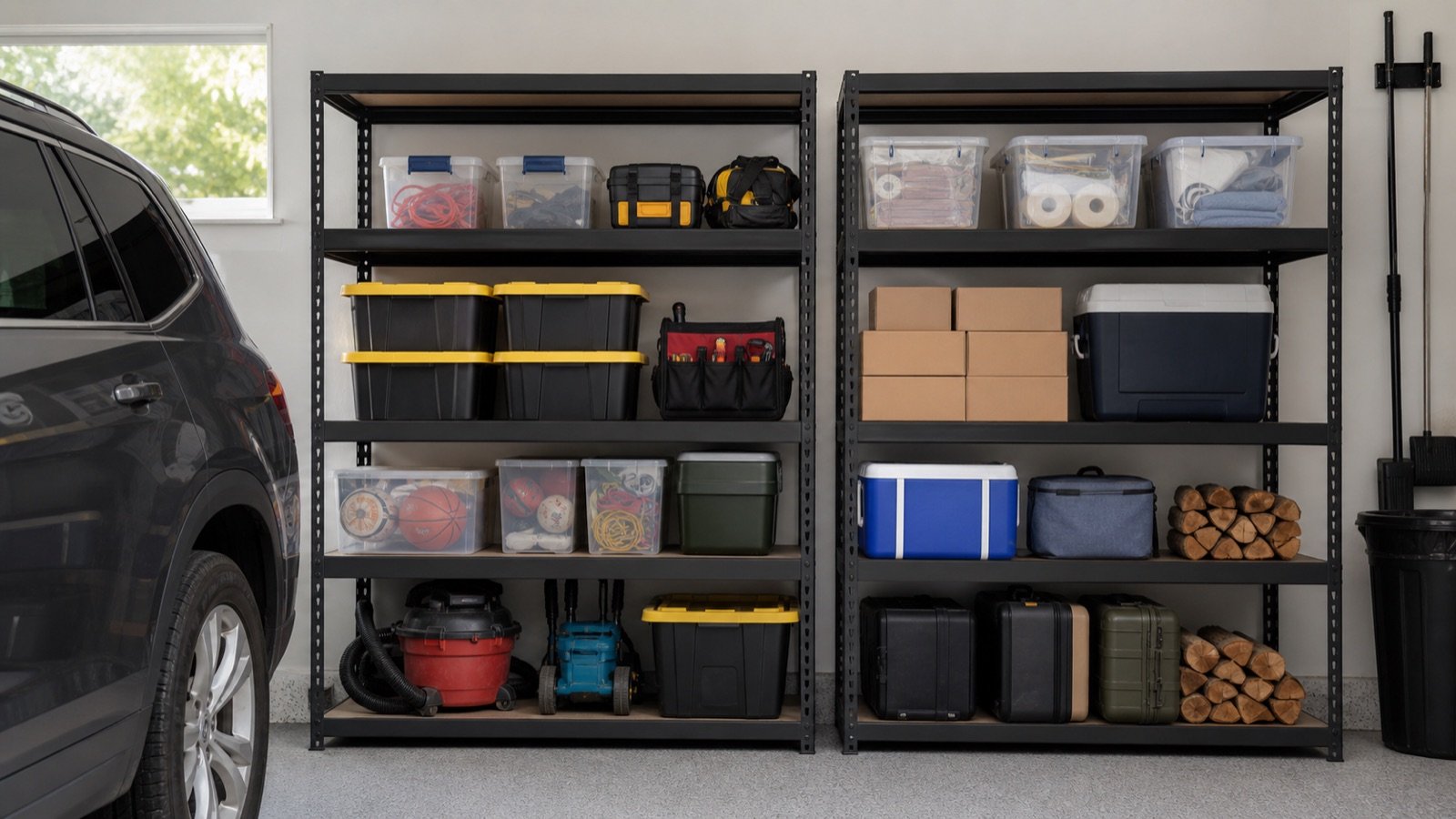
List the widest, deepest, tallest, and heaviest objects intended for the rack. Measure totes at the lid and handles. A shelf can be wide enough overall while the clear opening between uprights is too narrow.
Keep dense tools low. Reserve eye-level shelves for frequently used bins and supplies.
Depth changes the aisle
Eighteen inch shelves keep contents visible and preserve six inches compared with a 24 inch unit. Deeper shelves handle larger totes, but small objects disappear behind one another.
Use the garage shelving planner and read the depth comparison before buying.
Read load ratings carefully
Check the rating for each shelf and the whole unit. Look for conditions such as evenly distributed load and required wall restraint. Shelf capacity does not override floor condition, assembly errors, or instability from a tall narrow frame.
Do not use the rack as a ladder.
Choose a shelf surface
Wire permits airflow and lets dust fall through, but small parts and spills need trays. Solid steel, resin, or composite decks support little objects and wipe clean differently. Moisture matters, especially with unfinished particleboard.
The wire vs solid guide looks at the daily tradeoffs.
Material and environment
Steel handles dense loads well when the complete design and finish suit the environment. Resin avoids rust and is easy to wash, but heat, shelf span, and product rating still matter. Compare the exact models in our steel vs resin shelving guide.
Specification sheet
| Specification | Why it matters |
|---|---|
| Outside W x D x H | Room and aisle fit |
| Clear shelf opening | Actual object access |
| Adjustable spacing | Tall bins and changing use |
| Per shelf rating | Local load limit |
| Total rating | Complete unit limit |
| Surface material | Spills, small parts, moisture |
| Restraint instructions | Stability and installation |
Shelf spacing sets usable capacity
Count shelf levels only after assigning bin heights. Five closely spaced decks may hold less useful gear than four well-spaced shelves. Include the thickness of beams and decks when calculating the clear opening.
Put the tallest object in the lowest practical zone. Raising it above shoulder height makes both loading and inspection harder.
Test the floor and the feet
Garage floors slope toward the door and may have joints, curbs, or drains. Small adjustable feet can help with minor variation when the product allows it, but they are not a cure for a poor location. Check whether feet, casters, or base plates concentrate load on a fragile surface.
Assemble and level the empty rack before adding weight. Recheck it after the first full loading.
Useful products to compare
Use these searches to compare current dimensions, ratings, manuals, and availability. Check the exact model before buying.
Before you buy or install
Download the current manual for the exact model. Confirm assembled and packaged dimensions, individual and total load ratings, required clearances, mounting structure, included hardware, warranty, and inspection instructions. Product listings and specifications can change.
Mark the footprint or platform edges in the garage. Operate the vehicle doors and garage door, carry the intended bin through the access route, and check service panels and utilities. Do not improvise around electrical, gas, fire, or structural conditions.
Frequently asked questions
How deep should garage shelves be?
Use the shallowest shelf that fits the largest intended bin while preserving the aisle.
Do high load ratings mean the rack is stable?
No. Stability also depends on assembly, floor, proportions, restraint, placement, and correct loading.
Are adjustable shelves worth it?
Usually, if the adjustment range matches your bins and the hardware is easy to reposition safely.
Last reviewed: July 2026. Verify current product specifications and installation requirements before purchase.
Leave a Reply