Affiliate disclosure: As an Amazon Associate I earn from qualifying purchases. This article may contain affiliate links, and Bay & Bench may earn a commission at no extra cost to you. Read our full Affiliate Disclosure.
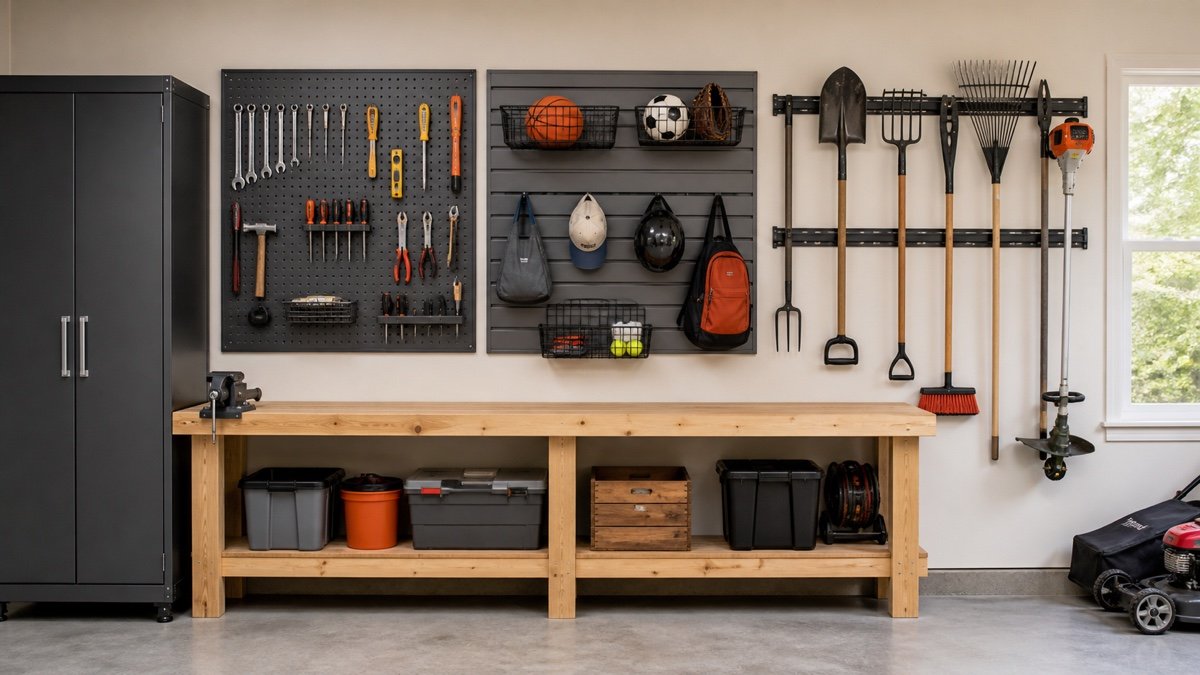
Garage wall storage systems can make an empty wall look like an easy win. Then you count the outlets, door tracks, studs, controls, and tools that don’t hang neatly. The right system is less about matching hooks and more about assigning each object a sensible home. Small hand tools behave well on pegboard. Bulky sports gear benefits from baskets and deeper hooks. A ladder or bicycle asks more of the mounting system. Start with that difference and the wall becomes much easier to plan.
Quick answer
Use pegboard for small tools and dense visual organization, slatwall for flexible baskets and medium-size gear, and a structural rail system for long or awkward items when the maker permits the load. Add shelves for bins and cabinets for items that need dust control or restricted access. Most garages work better with two compatible zones than with one system forced across every wall.
Map the wall before choosing a system
Photograph each wall straight on, then measure the clear width and height. Mark windows, outlets, switches, electrical equipment, plumbing, utility controls, stairs, and the complete travel path of the garage door. Include the open hatch of the tallest vehicle that uses the space.
Next, outline storage zones with painter’s tape. Keep frequently used tools near the workbench or exit where they are used. Yard tools need enough vertical room that handles don’t cross a door path. Sports equipment needs space to come off the hook without hitting a parked car.
Our garage measuring guide helps capture the room before product shopping begins. The pegboard and slatwall layout planner can then estimate panel coverage and accessory positions.
Do not cover required access areas or assume an empty patch of drywall is safe to drill. Identify the supporting structure and hidden services first.
Pegboard suits small tools and frequent changes
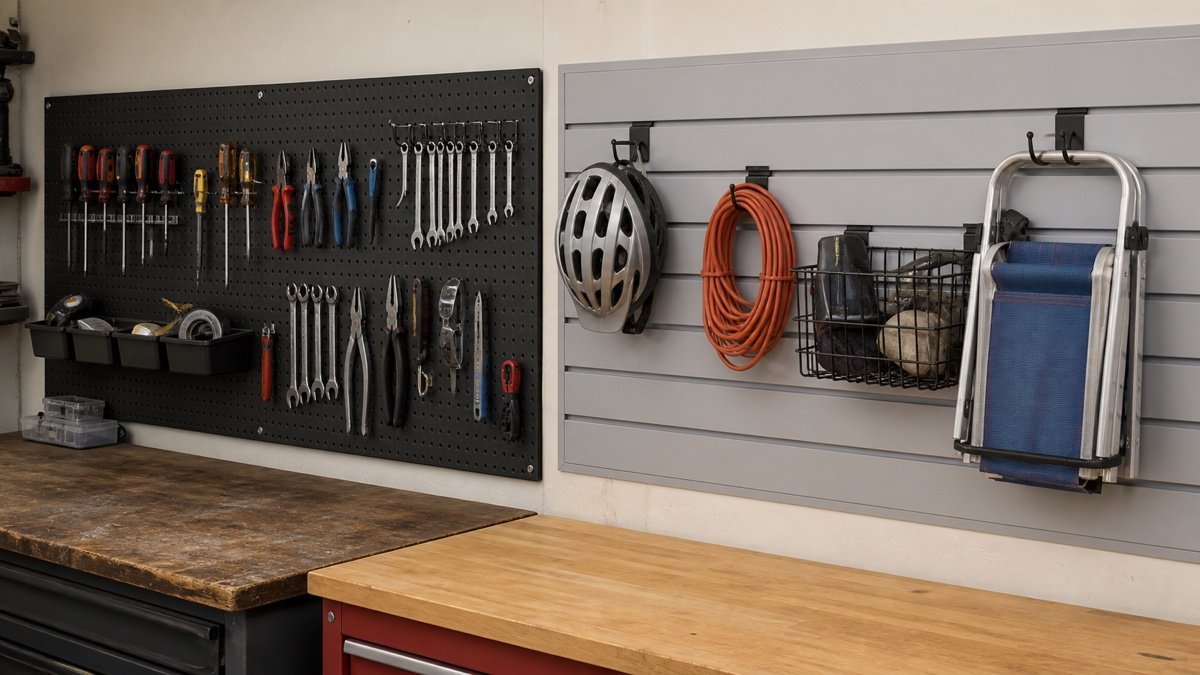
Pegboard earns its keep above a workbench. Holes repeat across the panel, so hooks and small holders can move as the tool collection changes. It is easy to see whether a wrench or pair of pliers is missing, and dense spacing makes good use of a modest area.
Panel material and hole pattern matter. Traditional fiberboard, metal panels, and plastic panels do not share identical ratings, fire behavior, moisture tolerance, or accessory fit. Some hooks need clips to resist lifting out when a tool is removed. Check compatibility rather than assuming every pegboard accessory is universal.
Pegboard is less convincing for deep baskets, wide sports gear, and heavy objects concentrated on one hook. A long tool can swing, and a bulky item may cover several rows of useful holes. Keep it focused on hand tools, measuring gear, and light accessories unless the specific system says otherwise.
A spacer or frame usually creates room for hook ends behind the panel. Install it exactly as directed and account for the finished depth above the bench.
Slatwall handles baskets and changing categories
Slatwall uses horizontal channels instead of a field of holes. Hooks, baskets, shelves, and specialty holders can slide or relocate along those channels. That makes the format comfortable with helmets, balls, cords, garden supplies, and medium-size bins.
A full panel gives the wall a finished look, but material and profile differences can lock you into a particular accessory family. Before covering a large area, price the hooks and baskets you will actually need. The panel is only part of the budget.
Check whether the panel is intended for garage conditions and how its rating changes with accessory type, fastener pattern, and mounting structure. Don’t infer the capacity of one brand from a visually similar panel. Even when two hooks appear to fit, the maker may not approve the combination.
Slatwall works best where storage categories change but the overall wall zone stays put. A family sports wall is a good example. Baskets and hooks can move as equipment sizes change without drilling a new hole for each revision.
Rail systems concentrate support where it is needed
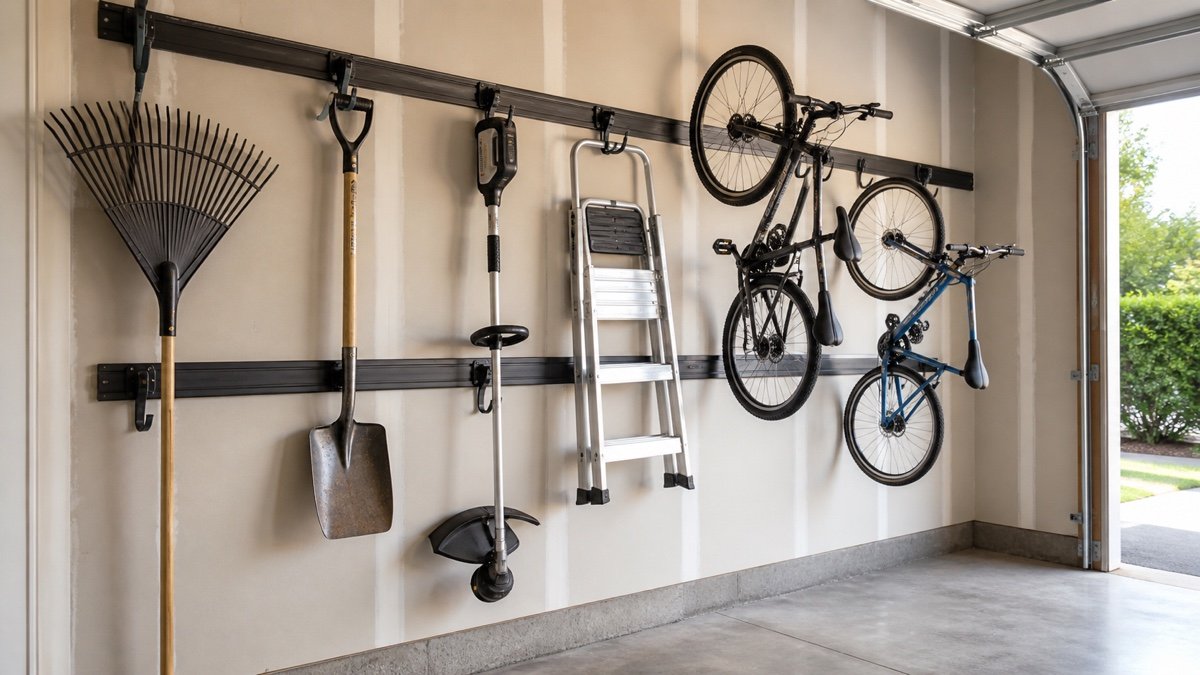
A rail or track system uses one or more horizontal mounting members with compatible hooks. It can be a good fit for long-handled yard tools, folded ladders, bicycles, hoses, and other awkward shapes. The open wall between rails stays visible, so the installation can use less material than a full panel.
That does not make every rail a heavy-load solution. Capacity depends on the exact track, hook, mounting pattern, fasteners, wall structure, and the way the object pulls away from the wall. A bicycle or ladder creates different leverage than a shovel held close to the surface.
Follow the manual for rail spacing and fastener positions. Use only compatible hooks, close any required retaining mechanism, and check that a hanging object cannot swing into the vehicle or garage door. The example shown keeps a clear floor and separates tools, ladder, and bicycles across supported rail positions.
Shelves and cabinets solve the things hooks cannot
Not every object belongs on display. Boxes of sanding discs, detailing supplies, spare hardware, and small power tool accessories often work better in bins on a shelf. A shallow shelf above the bench can support these containers without consuming an entire wall panel.
Cabinets hide visual clutter and can protect contents from some dust. Lockable models may help control access, but a lock does not make a cabinet suitable for every chemical, battery, fuel, or hazardous material. Follow product labels, cabinet instructions, and local requirements.
Wall-mounted cabinets also depend on the building structure and approved installation. Freestanding cabinets shift some demands to the floor but may still need restraint. The wall-mounted vs freestanding cabinet comparison covers that choice in detail.
Compare the main garage wall storage formats
| System | Good fit | Main check | Likely limitation |
|---|---|---|---|
| Pegboard | Hand tools and small holders | Panel, hole, hook, and clip compatibility | Bulky gear covers many useful positions |
| Slatwall | Baskets, sports gear, cords, and flexible zones | Panel profile and accessory family | Accessory cost can grow quickly |
| Rail or track | Long tools and awkward individual items | Mounting structure and leverage at each hook | Less useful for many tiny tools |
| Wall shelf | Bins, cases, and supplies with flat bases | Depth, bracket spacing, and clear reach | Items behind the front row are harder to see |
| Cabinet | Dust control, visual calm, and controlled access | Door swing, mounting, and contents | Higher cost and less instant visibility |
A hybrid wall usually makes more sense than choosing a winner. Use each format where its shape and access pattern fit the inventory.
Check the whole cost, not just the starter kit
Starter bundles can make a system look inexpensive. Build a real list before comparing totals: panel or rail coverage, edge trim, mounting hardware, hooks, baskets, shelves, bins, and any specialty holders. Add a little room for future changes, but don’t buy a pile of hooks with no assigned job.
Accessory availability matters over time. A proprietary system may be pleasant to use while compatible parts remain easy to find. A more common format may offer broader choices, though compatibility still needs checking. Read the warranty and replacement policy before committing an entire wall.
Use the garage storage budget calculator to compare complete setups. Enter the accessories, not just the base panel price.
Plan access by frequency and weight
Place everyday hand tools close to the work surface and within a comfortable reach. Yard tools used at the driveway can sit nearer the garage opening, provided they remain clear of the door path. Seasonal gear can move higher, but only if you have a safe way to retrieve it.
Weight changes placement. Dense objects should not be raised merely to clear the floor. Keep them low when practical, and avoid a hook position that requires lifting while twisting around a vehicle. An object that is easy to hang in an empty garage may be awkward when both cars are home.
Leave enough room to remove each item. A bicycle stored flat against the wall still needs a path for its handlebar and pedals. A deep basket needs upward or outward movement before it releases from the panel. Tape those movement envelopes on the wall.
Installation and inspection deserve time
Locate the intended support and compare it with the current instructions for the exact system. Choose fasteners approved for that structure and application. If you cannot identify the wall construction, or if the wall shows moisture damage or cracking, get qualified help before loading it.
Keep drilling away from suspected wiring, plumbing, and other hidden services. Preserve access and required clearances around electrical panels, appliances, utilities, sprinklers, and garage door hardware. Local rules and equipment instructions control those areas.
After loading the wall, inspect hooks, panels, rails, fasteners, and the surrounding surface. Look again after a few days and after any heavy impact. Stop using a position that moves, bends, cracks, or releases unexpectedly.
A tidy wall should also remain editable. Photograph the finished setup and keep a short inventory of hook types. When the storage mix changes, move an accessory rather than forcing a new object into a poor position.
A practical mixed wall plan
For a typical garage workshop, pegboard above the bench can carry the small tools used during a project. A nearby slatwall zone can take baskets, cords, and sports gear. One properly installed rail section can hold the ladder and long yard tools. Shelves or cabinets finish the plan for bins and items that should not hang.
Draw the zones first, then buy the minimum hardware needed to complete one wall. Use it for a couple of weeks. You may find that the rake belongs by the driveway or that a basket blocks the work light. Small corrections are cheap before the rest of the garage is covered.
For the wider room plan, start with our garage storage systems guide and garage storage planning guide. Wall storage works best when it supports the floor layout instead of fighting it.
Useful products to compare
These links open current Amazon search results so you can compare dimensions, manuals, ratings, and availability for the exact models on your shortlist.
Before you buy or install
Check the current manual for the exact product you are considering. Confirm the assembled dimensions, load rules, mounting requirements, included hardware, clearances, warranty, and any limits that apply to your wall, floor, or garage layout.
Frequently asked questions
What is the best garage wall storage system?
The best format depends on the inventory. Pegboard suits small tools, slatwall suits baskets and changing gear, and rails suit selected long or awkward objects. Many garages benefit from a mix.
Is pegboard or slatwall better for a garage?
Pegboard is often more efficient for many small hand tools. Slatwall is usually more comfortable with baskets and medium-size gear. Panel material, accessory compatibility, mounting, and cost still need comparison.
Can garage wall storage be installed over drywall?
Drywall may remain as the finish, but the system usually needs attachment to a suitable supporting structure according to its instructions. Do not treat drywall alone as proof of support.
How much wall storage should I buy?
Map the objects and movement space first, then cover one useful zone. Living with a smaller installation helps reveal which hooks and panels deserve expansion.
Leave a Reply